
The recent US-Israeli war against Iran was not only a military confrontation. It also became a full-scale stress test for Iran’s economic infrastructure, especially the energy sector that underpins foreign exchange revenues, domestic fuel supply and much of the country’s economic security. During days when fears of attacks on oil, gas and petrochemical facilities dominated markets, Iran’s energy industry was forced to maintain production, exports and network stability under extraordinary pressure.
Although crude exports and most domestic energy production continued without major interruption, the conflict exposed a deeper structural problem inside Iran’s energy architecture: excessive concentration. Analysts say the war revealed that Iran’s energy security depends not only on production volumes, but also on the geographic distribution of infrastructure, backup systems, export diversity and crisis management capacity.
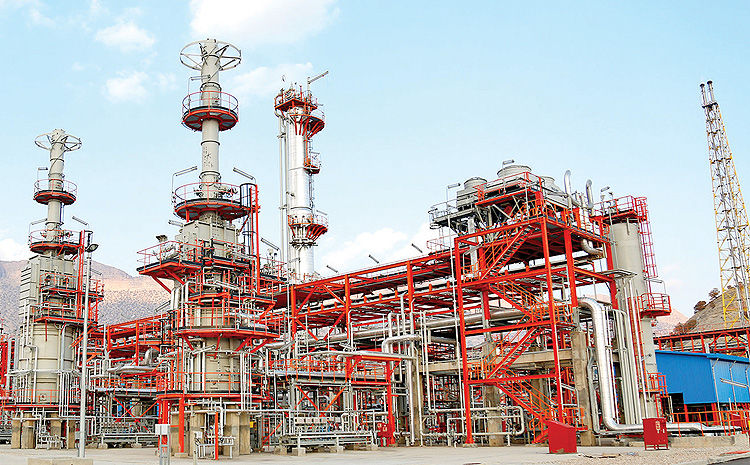
Iran’s energy system today rests on a highly concentrated triangle. Kharg Island handles most crude exports, South Pars remains the heart of gas production, while Assaluyeh and Mahshahr dominate petrochemicals. Over decades, this concentration emerged because of economic efficiency, access to feedstock and logistics advantages. Yet the recent conflict demonstrated that these same advantages have become strategic vulnerabilities.
Highly Fragile
Energy analyst Seyyed Reza Hosseini argues that Iran’s infrastructure remains “highly centralized and fragile.” According to him, even limited disruptions to shared utility centers in Assaluyeh and Mahshahr created major operational risks for petrochemical production. Power, steam, water and industrial utility hubs such as Fajr, Mobin and Damavand function as lifelines for dozens of petrochemical complexes. Damage to only a few of these shared facilities temporarily disrupted around 75% of Iran’s petrochemical capacity.
The same vulnerability exists in oil exports. Estimates suggest roughly 85% of Iran’s crude exports pass through Kharg Island, making the terminal one of the country’s most sensitive geopolitical chokepoints. Any prolonged disruption there could effectively halt oil exports.
Still, the war also highlighted another side of Iran’s energy industry: operational resilience. Many analysts believe the sector’s ability to maintain output under wartime conditions relied heavily on experienced field personnel rather than on resilient infrastructure itself. Energy analyst Masoud Dashti-Derakhshan says the most important achievement during the conflict was the performance of technical and operational staff who kept facilities running despite security threats.
However, he warns that many skilled workers face income pressures and declining incentives, raising concerns about future talent losses in the industry. In a sector heavily dependent on operational expertise, the departure of experienced engineers could become a long-term strategic threat.
The conflict has revived attention toward diversification projects that were previously progressing slowly. One of the most important is the Goreh-Jask pipeline, designed to move part of Iran’s crude exports from the Persian Gulf to the Sea of Oman and reduce dependence on Kharg Island and the Strait of Hormuz.
Analysts also emphasize the strategic importance of Makran’s coastal region. Despite years of discussion about turning Makran into a new energy hub, many projects remain stalled at planning stages. Experts argue that expanding infrastructure along the Makran coast could distribute energy assets more evenly and reduce concentration risks.
The war ultimately changed the definition of energy security for Iran. Production capacity alone no longer guarantees resilience. The future of Iran’s energy sector may depend less on producing more oil and gas and more on creating a diversified, flexible and geographically balanced infrastructure capable of surviving future crises.