
Iran’s mining sector is facing one of its most difficult periods in recent years as rising production costs, tighter regulations and supply chain disruptions squeeze the industry’s already thin profit margins. While official figures for the Iranian year 1403 (March 2024-March 2025) point to growth in production, investment and employment, industry insiders warn that the current reality on the ground is far more fragile.
The sector, which plays a critical role in supplying raw materials to domestic industries and generating export revenues, is increasingly operating in survival mode rather than expansion mode. Higher royalties, rising export duties, costly equipment, shortages of essential materials and regulatory uncertainty have created a challenging environment for mining companies across the country.
According to the latest data from the Statistical Center of Iran, the country had 6,670 active mines in 1403, employing more than 146,000 workers and producing around 551 million tons of mineral materials. Value added and investment in the sector also recorded notable growth.
However, much of that growth appears to have been driven by inflation and higher nominal production values rather than improvements in productivity, technology or efficiency. Industry experts say the pressures that intensified from the beginning of 1404 (March 2025-March 2026) and into recent months of 1405 are now threatening the sustainability of that growth.
Costs Climb Sharply
One of the most serious challenges facing miners is the soaring cost of production inputs. Prices for machinery, industrial materials and technical services have risen sharply over the past year, while restrictions on imports have made it increasingly difficult to replace or upgrade mining equipment.
Hassan Hosseingholi, a member of the Mining Commission of the Iran Chamber of Commerce, described the current situation in a recent interview with Donya-e-Eqtesad as nothing short of a “crisis.”
“The situation has reached a point where it can only be described in one word: crisis,” he said. “This crisis starts with shortages of raw materials and equipment and extends to financial and policy pressures.”
According to Hosseingholi, one of the biggest obstacles is the shortage of explosive materials used in extraction activities. Many mines depend on these materials to continue operations, and without reliable access, production can quickly slow or stop entirely.
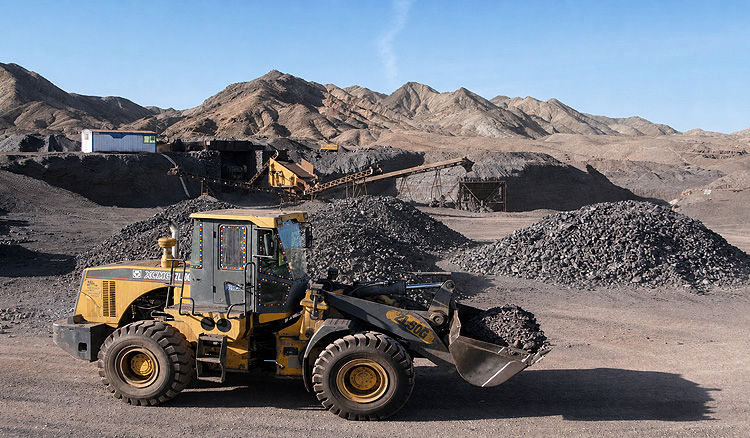
At the same time, mining machinery has become both scarce and prohibitively expensive. “Equipment such as excavators are either very difficult to obtain or their prices have risen dramatically,” he said.
The rising cost of steel and metal sheets has also pushed up machinery prices. Consumable industrial materials have experienced similar price jumps. “Some items such as acid have nearly doubled in price,” Hosseingholi said.
These increases have significantly raised production costs while sharply reducing profit margins for mining companies.
Pressure From Policy
Alongside rising costs, mining firms are also dealing with growing fiscal and regulatory pressure.
Export duties have risen substantially in recent years, weakening the competitiveness of Iranian mineral exports in foreign markets. According to Hosseingholi, duties that were once around 0.5% have gradually increased to 2%, then 5%, and now in some cases close to 15%.
“This has seriously reduced exporters’ competitiveness and weakened incentives to remain active in international markets,” he said.
Tax policy changes have added further pressure. Exemptions that were previously available to mining and production sectors under earlier tax laws have gradually been removed under newer legislation linked to Iran’s Seventh Development Plan.
Mining royalties have also surged. Hosseingholi said government revenue from mining royalties has increased from around one trillion tomans in previous years to tens of trillions of tomans today.
He criticized the method used to calculate these payments, arguing that they are often disconnected from the actual profitability of mining operations.
“Royalties should be determined based on real profits and the scale of investment, but in practice this relationship is not properly observed,” he said.
He also pointed to the lack of transparency in implementation, noting that software systems designed for accurate royalty calculations are often ignored and decisions continue to be made subjectively.
Growth With Fragile Foundations
The contrast between official statistics and conditions inside mining firms highlights a broader structural issue within Iran’s mining economy.
Although macroeconomic indicators show growth, many businesses are increasingly struggling to maintain operations. Much of the recent expansion appears tied to inflationary increases in mineral prices rather than improvements in productivity or technological development.
The concentration of mining activity in a limited number of provinces also raises concerns about structural imbalance and regional vulnerability.
Meanwhile, restrictions on importing machinery and accessing critical materials have reduced the sector’s ability to modernize. Without technological renewal, many mines may find it difficult to sustain production over the longer term.
Hosseingholi warned that many companies are currently surviving only because they still rely on reserves and conditions established before the recent wave of pressures emerged.
“This situation is not sustainable,” he said. “If current conditions continue, there is a real possibility of gradual mine closures and shutdowns of processing units.”
Employment Risks Rising
The mining sector is also an important source of employment, particularly in less-developed regions where alternative job opportunities are limited.
So far, many companies have tried to avoid layoffs despite mounting financial pressure. But industry insiders warn that this may not remain possible if conditions worsen further.
“If these pressures continue, companies will eventually be forced to reduce their workforce,” Hosseingholi said.
That could create broader economic and social challenges, particularly in provinces heavily dependent on mining activities.
The future of Iran’s mining industry now appears increasingly tied not only to geological reserves or global commodity prices, but also to policymaking. Industry participants argue that stabilizing regulations, easing access to equipment and revising fiscal burdens have become urgent priorities.
Without such adjustments, the sector risks moving from a period of fragile growth into a deeper cycle of stagnation and gradual decline.