
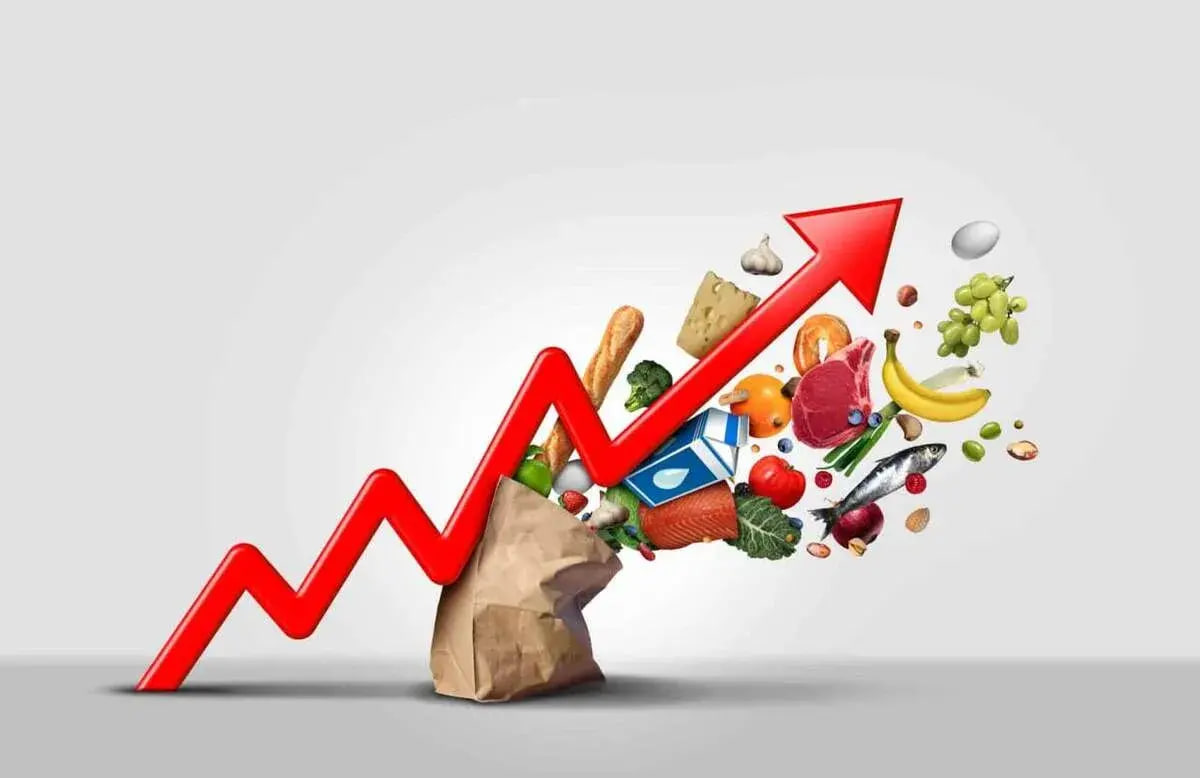
Food inflation in Iran has surged to exceptionally high levels, putting mounting pressure on household budgets as the cost of basic goods continues to climb sharply.
According to data from the Statistical Center of Iran, the average price of 11 essential goods in the national subsidy basket rose by 148% in the first month of the Iranian year 1405 (March 21–April 20), compared with the same period a year earlier. In effect, the cost of a basic food basket has increased to nearly 2.5 times its previous level within just one year.
The steepest increase was recorded in cooking oil, which rose by 308%, followed by chicken meat at 191%, Iranian rice at 173%, and eggs at 171%. Other staples also saw strong gains, including pulses, which rose by 92%, sugar by 80%, and pasta by 75%.
As prices climbed, the cost of a standard food basket for a four-person household reached about 19.5 million tomans (around $110). At the same time, the minimum monthly wage stands at around 22 to 24 million tomans (approximately $125–$135), depending on allowances and household composition. Even after including government food subsidies of 1 million tomans per person, total household income for a family of four reaches roughly to 28 million tomans (about $160). Under these conditions, food alone now consumes around 70% of income, up from 48% a year earlier.
In an attempt to reform the subsidy system, authorities introduced an “electronic food basket” scheme in January 2026, replacing indirect subsidies on imports and production with direct payments to consumers. The aim was to improve efficiency and better target support.
However, prices have continued to rise following the reform, reflecting broader inflationary pressures, supply constraints, and ongoing disruptions in distribution channels. Analysts also point to the role of external tensions and economic uncertainty in worsening market conditions.
Some items have seen extreme price spikes. Solid cooking oil surged by 375% to around 385,000 tomans per kilogram, while imported rice jumped 209% to 250,000 tomans per kilogram.
Although wages increased by roughly 60% in 1405, income growth has lagged far behind food inflation. The result is a continued erosion of purchasing power, particularly for lower-income households, where food now accounts for the majority of monthly spending.