
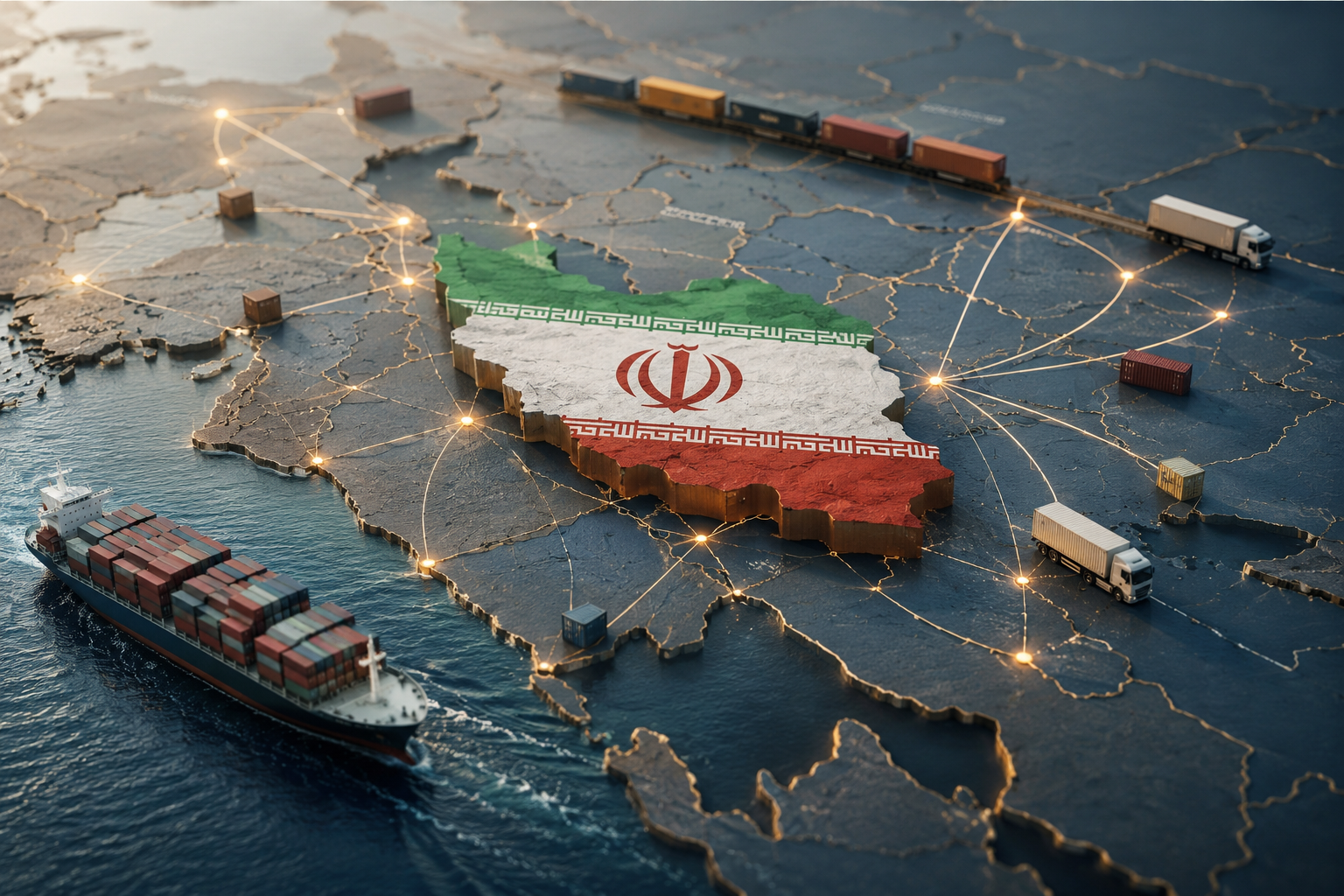
In the modern geopolitical landscape, economic resilience has become as important as military power. From the naval blockade of Germany during World War I to sanctions imposed on countries such as Iran, Russia and China, economic pressure has increasingly turned into a central instrument of global competition. For Iran, recent regional tensions have once again exposed the strategic importance of diversified trade and logistics networks.
Over the past decade, US sanctions have significantly reshaped Iran’s foreign trade structure. China gradually emerged as the country’s largest export destination, while the United Arab Emirates—especially Dubai—became the primary gateway for imports, financial transactions and re-export operations linked to sanctions circumvention. While this model helped Iran preserve parts of its foreign trade under sanctions, it also created a dangerous level of concentration.
Today, Iran’s external trade is more dependent on a limited number of partners and routes than at any point in recent decades. Official data show the number of countries accounting for around 80% of Iran’s exports fell sharply from 21 countries in 2004 to only seven countries in 2023. Such concentration reduces flexibility and increases the bargaining power of key trading partners over Tehran.
The UAE illustrates this vulnerability more clearly than any other country. Iran’s imports from the UAE reportedly rose from around $5.7 billion in 2018 to over $20 billion in 2025. During the same period, the UAE’s share of Iran’s total imports climbed from 13% to more than 30%.
This dependence was not created by geography alone. Dubai developed into a regional commercial and financial hub with advanced logistics infrastructure, flexible business regulations and broad access to international banking systems. Thousands of Iranian-owned or Iranian-linked firms established operations in Dubai and the UAE’s free zones, creating networks that facilitated re-export operations, foreign exchange settlements and trade financing.
For many years, Jebel Ali Port effectively functioned as Iran’s unofficial commercial gateway to global markets. Large volumes of goods destined for Iran first entered Dubai before being transported to Iranian ports. At the same time, the UAE dirham market became central to Iran’s foreign exchange operations. Estimates suggest nearly 80% of the currency required for Iranian imports was supplied through Dubai’s financial system.
Strategic Liability
However, efficiency came at the cost of resilience. As political tensions between Tehran and Abu Dhabi deepen, Iran’s heavy reliance on Dubai increasingly appears to be a strategic liability. Any disruption in trade relations, banking access or shipping routes linked to the UAE could quickly affect Iran’s currency market, imports and domestic supply chains. Previous restrictions imposed by Emirati authorities have already demonstrated how vulnerable Iran’s economy becomes when access to Dubai tightens.
The issue goes beyond current tensions. Iran now faces a broader structural challenge: reducing excessive dependence on a single regional hub.
In the short term, Tehran will likely attempt to expand trade ties with alternative regional partners. Oman appears to be one of the most realistic options. Stable political relations with Iran, combined with Muscat’s ambitions to compete with Dubai as a regional trade and logistics center, have increased Oman’s strategic importance. Ports such as Sohar, along with relatively flexible commercial regulations, could attract part of the trade currently routed through the UAE.
India, Pakistan and Iraq may also play larger roles in Iran’s regional trade network. Yet replacing Dubai will not be easy. Iran’s imports from the UAE alone remain several times larger than the combined imports from Oman, India and Pakistan. This imbalance reflects years of overconcentration and underinvestment in alternative logistics corridors.
Beyond regional diplomacy, domestic reforms will also be necessary. Simplifying trade regulations, easing foreign exchange restrictions and improving investment conditions could help Iran attract greater participation from overseas Iranians and private investors. Many Iranian businesspeople abroad possess both capital and commercial networks, but complicated regulations and financial restrictions continue to limit their role in the economy.
Untapped Opportunities
At a broader level, Iran’s geopolitical position still offers major untapped opportunities. The country sits at the intersection of important regional corridors connecting Asia, Europe and the Middle East. Projects such as the International North-South Transport Corridor, expanded rail links and the modernization of southern ports could gradually reduce Iran’s excessive dependence on Persian Gulf shipping routes.
Diversification in logistics, trade partnerships and financial mechanisms is no longer simply an economic preference for Iran, it has become a strategic necessity. Even if future diplomatic agreements reduce sanctions pressure, relying too heavily on a single trade hub will continue to expose the country to external shocks.