
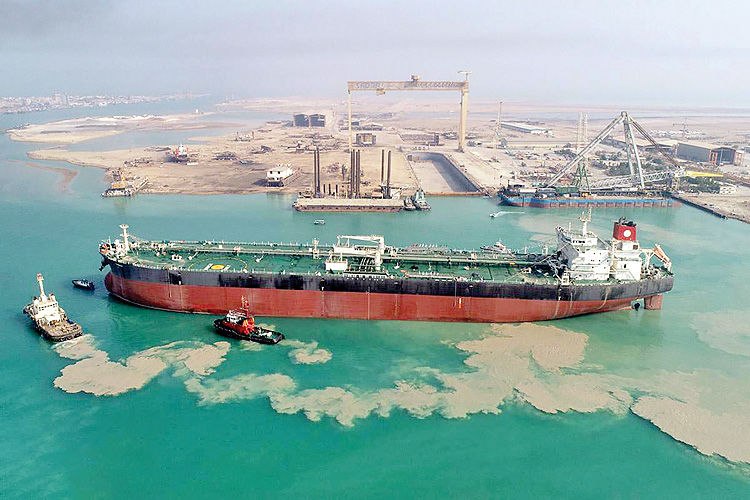
Iran’s oil system is not collapsing under pressure—it is adapting. Decades of sanctions have transformed the country’s energy sector into one of the most flexible and battle-tested in the global market. Contrary to the widely held assumption that a naval blockade can halt oil exports overnight, mounting evidence suggests a far more complex reality: disruption, yes—but not immediate breakdown.
Field data and reporting from major international outlets indicate that Iran’s oil infrastructure continues to function, albeit under strain. The key distinction lies in how pressure manifests. Rather than triggering a sudden supply shock, the current blockade is producing a gradual tightening—a slow-burn disruption that markets struggle to price in real time.
At the heart of this system is Kharg Island, which handles roughly 90% of Iran’s crude exports—about 1.5 to 2 million barrels per day under normal conditions. Beyond its role as a loading terminal, Kharg acts as a strategic buffer, with storage capacity estimated at up to 30 million barrels. This allows Iran to sustain production even when export flows fluctuate. But under blockade conditions, that same buffer risks becoming a bottleneck. As tanker traffic slows or becomes irregular, crude begins to accumulate, pushing the system toward what analysts describe as “operational congestion.”
Shock Absorbers
Yet even here, collapse is not immediate. Oil systems are engineered with layers of redundancy—storage tanks, pipelines, and floating storage options—designed precisely to absorb shocks. Iran has leaned heavily on these mechanisms. Ship-to-ship transfers, opaque shipping routes, and a so-called “shadow fleet” help obscure the origin and destination of cargoes. Meanwhile, parts of the tanker fleet are repurposed as floating storage, buying time as onshore tanks fill.
Production, too, is managed with precision. Rather than shutting wells abruptly—a move that could permanently damage reservoirs—output is reduced gradually. Engineers, seasoned by years of sanctions, calibrate production to avoid both storage overflow and long-term geological harm. Domestic refineries absorb a portion of excess crude, though their capacity remains limited.
The result is not resilience in the traditional sense, but endurance—a system that continues to operate under mounting constraints, becoming less efficient but not inoperative.
For global markets, this distinction matters. A sudden disruption would trigger immediate price spikes and emergency responses. A gradual squeeze, however, creates a more ambiguous environment. Prices rise in stages, other producers gain time to react, and strategic reserves can be deployed more deliberately. But uncertainty deepens, making forecasting more difficult and potentially misleading policymakers into underestimating the severity of the situation.
An Underestimated Reality
What Washington appears to have underestimated is not just Iran’s technical capacity, but its institutional memory. Years of economic warfare have forced Tehran to develop a playbook for survival—one that prioritizes flexibility over efficiency.
China’s role adds another critical layer. As Iran’s largest oil buyer, Beijing has effectively acted as a pressure valve for Tehran’s exports. In a rare and explicit move, Chinese authorities have instructed domestic refiners not to comply with US sanctions targeting Iranian-linked entities. This includes independent “teapot” refiners, which account for roughly 90% of China’s Iranian crude imports.
This policy shift is more than symbolic. It provides a steady, if partially concealed, outlet for Iranian oil, undermining the core objective of US sanctions: cutting off revenue entirely. Even as export volumes fluctuate and costs rise, tens of millions of barrels remain in transit or in floating storage, keeping supply chains alive.