
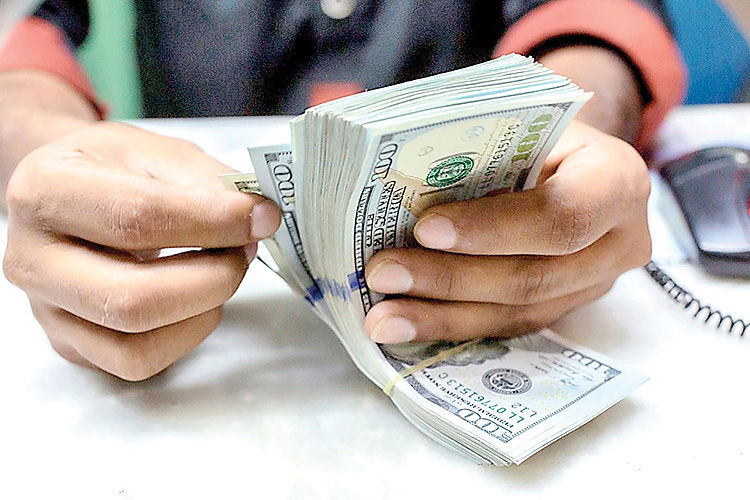
Iran’s foreign exchange market has entered a new phase of volatility, with the dollar rising sharply from around 150,000 tomans early last week to above 170,000 by midweek—and extending its rally to over 180,000 at the start of the new Iranian week. The pace of the increase signals not just a temporary imbalance, but a fragile market struggling with simultaneous shocks on both the demand and supply sides.
Last week’s surge was initially driven by a rebound in demand. Following a temporary ceasefire in the recent US–Israel conflict with Iran, businesses and traders largely stayed on the sidelines, waiting for clearer political and economic signals. As that uncertainty persisted without resolution, economic activity gradually resumed. This triggered a release of pent-up demand, particularly from importers and firms seeking to secure foreign currency, putting immediate upward pressure on the exchange rate.
At the same time, supply conditions deteriorated. Key export sectors—especially petrochemicals and steel—faced disruptions due to recent geopolitical tensions and operational constraints. Production capacity was partially affected, while export revenues declined further after restrictions were imposed on certain outbound shipments to prioritize domestic needs. As a result, foreign currency inflows weakened precisely when demand was picking up, widening the gap and accelerating price increases.
The fact that the dollar crossed 180,000 on Saturday suggests that the market has yet to stabilize. In a shallow and thinly traded market, even modest changes in expectations can trigger large price swings. This makes the current environment highly sensitive to both policy actions and investor sentiment.
Policy Tools
One of the most immediate policy tools available is the issuance of high-yield local currency bonds. In times of rising inflation expectations, investors often shift toward foreign currency as a hedge. Offering attractive returns on domestic assets can help redirect some of this liquidity back into the financial system. If implemented effectively, such instruments can reduce pressure on the foreign exchange market. However, their success depends heavily on credibility and consistent policy execution.
Another important tool is the issuance of foreign currency-denominated bonds. These instruments allow investors to benefit from exchange rate movements without directly purchasing foreign currency in the spot market. By providing a regulated alternative, they can absorb part of the speculative demand that fuels volatility. For this approach to work, transparency and strong institutional backing are essential.
Strengthening the supply side is equally critical. The government can play a stabilizing role by increasing foreign currency availability through accessible channels, including energy exports where possible. Targeted intervention aimed at smoothing volatility—rather than fixing prices—can help anchor expectations and reduce panic-driven behavior. Even credible signals about adequate reserves can have a calming effect.
Clear communication is another key factor. Much of the recent volatility appears to be driven by uncertainty rather than hard data. Many businesses remain unclear about foreign currency availability and policy direction. More transparent and frequent communication by the central bank can help reduce this uncertainty. When market participants better understand the policy framework, they are less likely to engage in precautionary buying.
Structural adjustments can also support stability. With maritime trade routes facing constraints, expanding land-based trade has become increasingly important. Strengthening transport infrastructure, simplifying customs procedures and deepening regional trade ties can help sustain export flows and maintain foreign currency earnings. While these measures take time, they improve resilience against external shocks.
Decisive Factor
Finally, diplomacy remains a decisive factor. Exchange rate dynamics in Iran are closely linked to geopolitical developments. Any progress in negotiations or easing of tensions can quickly improve sentiment and facilitate smoother currency flows. On the other hand, prolonged uncertainty tends to increase demand for foreign currency as a defensive move.
The recent surge in the dollar reflects a combination of returning demand, constrained supply and fragile expectations. While the shock is significant, it is not unmanageable. A coordinated policy response—combining monetary tools, supply-side measures, transparent communication and diplomatic efforts—can help restore stability.
The coming weeks will be critical. If expectations are anchored and supply improves, the current spike may prove temporary. If not, the market could face a more persistent upward trend.