
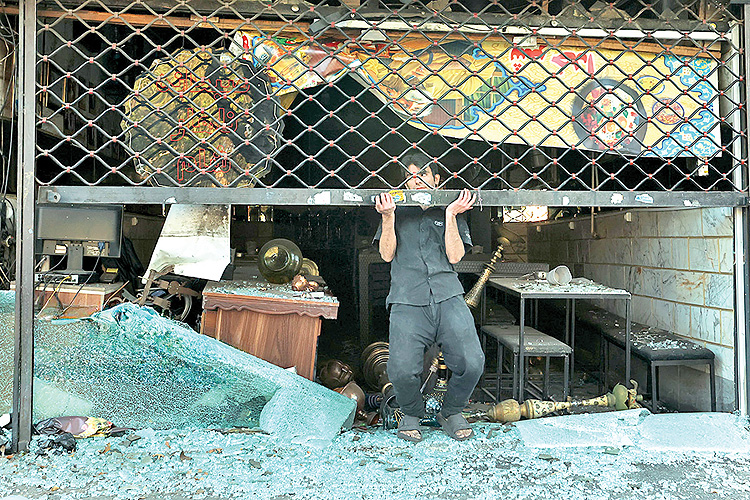
A fragile two-week ceasefire following weeks of conflict has created a narrow but critical window for Iran’s economy to stabilize and potentially pivot toward recovery. After nearly six weeks of war-induced disruption—marked by damage to civilian infrastructure, heavy industries, and petrochemical facilities—the economy now faces a dual reality: deep structural strain alongside a rare opportunity for reset.
The halt in hostilities, coupled with the confirmation of negotiations in Islamabad, has revived cautious optimism among policymakers and private-sector leaders. Many argue that if the ceasefire evolves into a lasting peace, it could mark a turning point—especially if accompanied by sanctions relief that enables Iran to reconnect with global markets.
Economic actors widely view the lifting of sanctions as the single most transformative factor for recovery. Keyvan Kashfi, a board member of Iran’s Chamber of Commerce, emphasized this point in a recent interview, stating: “We hope the current ceasefire will lead to a lasting peace and remove the shadow of war that has threatened Iran’s economy in recent years. Lifting sanctions after three decades offers a unique opportunity for economic growth and development.”
Kashfi argued that many of Iran’s persistent economic challenges—both domestic and international—stem from prolonged isolation. “Restrictions on direct engagement with the world have not only increased transaction costs but also contributed to currency volatility and social dissatisfaction,” he said. According to him, enabling direct trade and financial flows could significantly improve economic conditions.
He also pointed to the inefficiencies created by sanctions-era workarounds: “Our economy has operated in a non-transparent environment, relying heavily on intermediaries. This has imposed considerable additional costs.” In a post-sanctions scenario, Kashfi believes Iran could leverage its southern ports to reestablish direct trade links, though he cautioned that this would require aligning domestic banking and financial institutions with international standards.
Private Sector Role
Beyond sanctions relief, experts stress that the scale of post-war reconstruction demands a central role for the private sector. Hossein Pirmoazen, another senior chamber official, described the rebuilding process as “one of the most fundamental and complex national missions.” He emphasized that the private sector must act not merely as a complementary force but as “the driving engine of reconstruction and economic development.”
Pirmoazen outlined the multifaceted challenges facing the post-war economy: widespread infrastructure damage, declining investment, rising unemployment, supply chain disruptions, and eroded public trust. “Rapid, efficient, and prioritized reconstruction of transport, energy, communications, and key industries is unavoidable,” he said, noting that government resources alone are insufficient.
He proposed structured public-private partnerships as a first step: “Systematic participation of the private sector in infrastructure projects through mechanisms such as PPPs must be placed on the agenda.” This, he added, requires transparent legal frameworks, tax incentives, and credible guarantees for investment security.
Reviving production capacity and employment is another critical task. “Rehabilitating damaged industrial units, re-employing labor, and fostering entrepreneurship will play a vital role in mitigating the social and economic consequences of war,” Pirmoazen stated.
He also highlighted the importance of mobilizing both domestic and foreign capital: “Financing reconstruction requires a stable, transparent, and predictable economic environment.” In this context, international cooperation and technology transfer could accelerate recovery and boost productivity.
Importantly, Pirmoazen framed the post-war period as an opportunity for structural transformation: “This period should be seen as an opportunity to transition toward a knowledge-based, smart, and competitive economy.” He underscored the role of innovative firms and startups in achieving this shift.
While macro-level strategies dominate policy discussions, immediate operational challenges persist—particularly in the digital economy. Over recent months, restricted access to international internet services has significantly disrupted online businesses.
Private-sector voices have become increasingly vocal. Pedram Soltani, a veteran business figure, captured the urgency in a public statement: “Restore the internet today. Small businesses are collapsing.” His warning reflects broader concerns that without reliable global connectivity, many enterprises—especially SMEs—will struggle to survive, let alone participate in recovery.
Ultimately, the success of Iran’s economic reconstruction hinges on the interplay between peace, policy reform, and private-sector dynamism. The ceasefire has created an opportunity—but one that is both limited and fragile.