
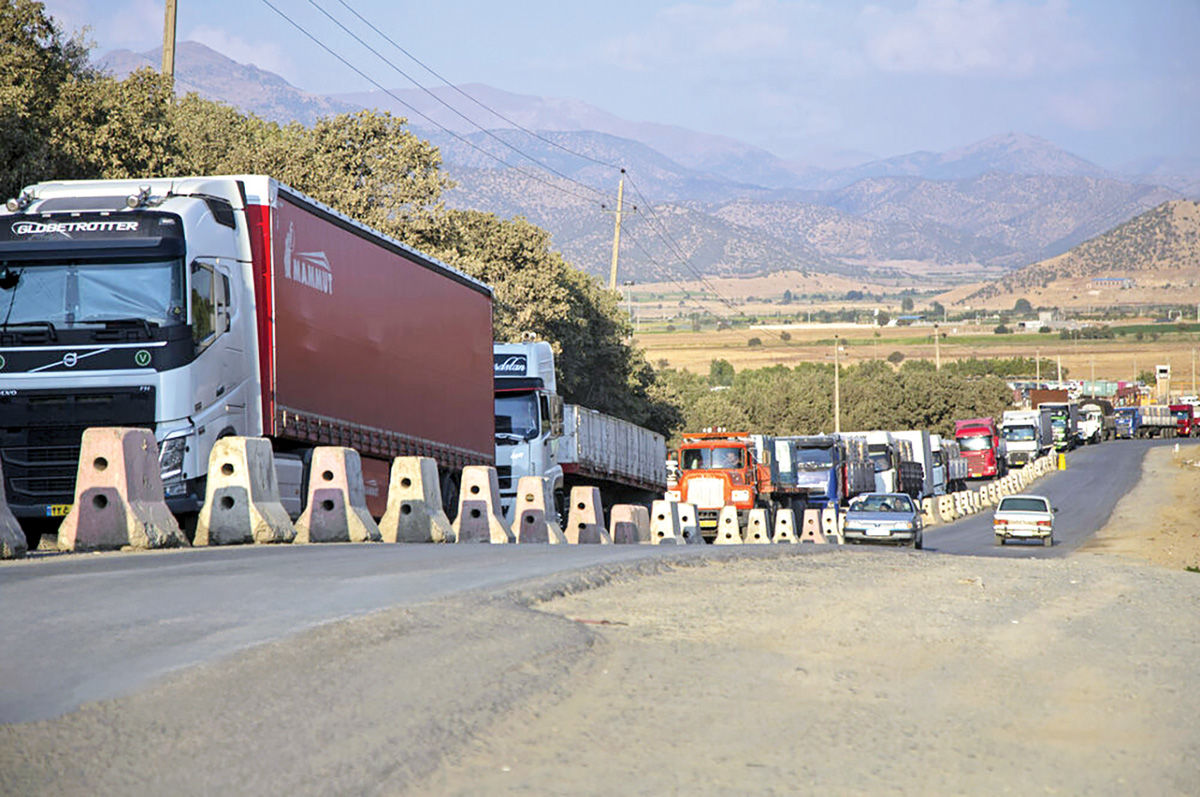
As regional tensions disrupt established logistics corridors, Iran is recalibrating its trade routes to secure the steady supply of essential goods. The effective loss of access to the UAE’s Jebel Ali port—a long-standing hub for Iranian imports—has accelerated a strategic pivot toward alternative regional pathways. While trade flows have not halted, the transition is raising costs and exposing structural inefficiencies in the country’s logistics network.
For years, Jebel Ali functioned as a key conduit for Iran’s external trade, particularly under sanctions. Its scale, connectivity and operational efficiency made it difficult to replace. With that option now constrained, policymakers are leaning on Iran’s geographic advantage—its proximity to 15 neighboring countries—to diversify transit routes. Yet these alternatives, while viable, fall short of the speed and cost efficiency offered by established maritime channels.
Globally, maritime transport accounts for more than 80% of trade, underscoring its central role in international commerce. Iran’s access to open waters has historically supported this advantage. However, the current conflict is pushing the country toward a more fragmented logistics model that blends sea, land and rail transport—an approach that is inherently more complex and costly.
Unavoidable Adjustments
Ali Emami, director general of logistics services at the Trade Promotion Organization, said adjustments to supply routes are now unavoidable. “Given the recent tensions and security concerns, revising procurement and logistics methods has become essential,” he said. “If disruptions occur at ports, alternative routes must be activated.”
Emami identified Turkey as a primary substitute corridor. “Ports such as Mersin on the Mediterranean and Trabzon on the Black Sea can facilitate the transfer of goods to Iran,” he said. “From these ports, cargo can be moved overland into the country.” He noted that while preparations for these routes are in place, they have not yet been fully utilized. “These alternatives can cover part of the country’s needs if necessary, but at present the Strait of Hormuz in the Persian Gulf remains operational and secure for trade.”
Pakistan represents another strategic option. “Gwadar port, due to its proximity to Iran, offers a significant logistical advantage, while Karachi can also serve as an effective gateway,” Emami said. However, he cautioned that these routes are not without challenges. “Relying on alternative corridors significantly increases logistics costs, and road transport requires compliance with international standards, which can be difficult to meet.”
Rail-based solutions are also under consideration. Emami pointed to the China–Kazakhstan corridor linking to Aktau port as a potential channel for industrial imports, including machinery and electronic components. Still, he emphasized that such multimodal arrangements add to overall expenses. “When cargo must be handled and processed in third countries, total costs rise considerably,” he said.
Despite the disruptions, trade continuity has been maintained. “Over the past month, none of Iran’s border crossings have faced serious disruptions, and trade flows have continued,” Emami said. “Facilitating measures by customs, the Ministry of Roads and other agencies have helped accelerate clearance procedures.” He acknowledged that some Iranian goods remain stranded in Jebel Ali but added that “mechanisms are being explored to bring them into the country.”
Alternative Supply Paths
Logistics expert Mojtaba Baharvand said the choice of alternative routes depends largely on the origin of imports. “Goods from Europe can be redirected via Turkey, while shipments from China may be routed through Kazakhstan and the Sarakhs border crossing,” he said. He added that imports from East Asia—traditionally routed through the UAE—could now shift toward Oman as an alternative hub.
Baharvand stressed that the Strait of Hormuz in the Persian Gulf remains a critical artery. “It is still accessible for Iranian vessels and those of non-hostile countries, and there is optimism that it will remain open,” he said. He also highlighted the underutilized capacity of Chabahar port. “If tensions escalate further, Chabahar could become a key entry point, particularly for goods from China and India via the Sea of Oman.”
Cost pressures, however, are intensifying. “Since the onset of the conflict, each transit container has incurred an additional cost of $1,600 to $2,000, mainly due to war-risk insurance premiums and elevated freight rates,” Baharvand said.
Iran’s trade system is demonstrating resilience under pressure, but at a rising cost. The shift away from efficient maritime hubs toward more complex, multi-route logistics reflects a broader reality: sustaining trade amid geopolitical disruption is feasible—but increasingly expensive and operationally demanding.