
Hamid Mollazadeh
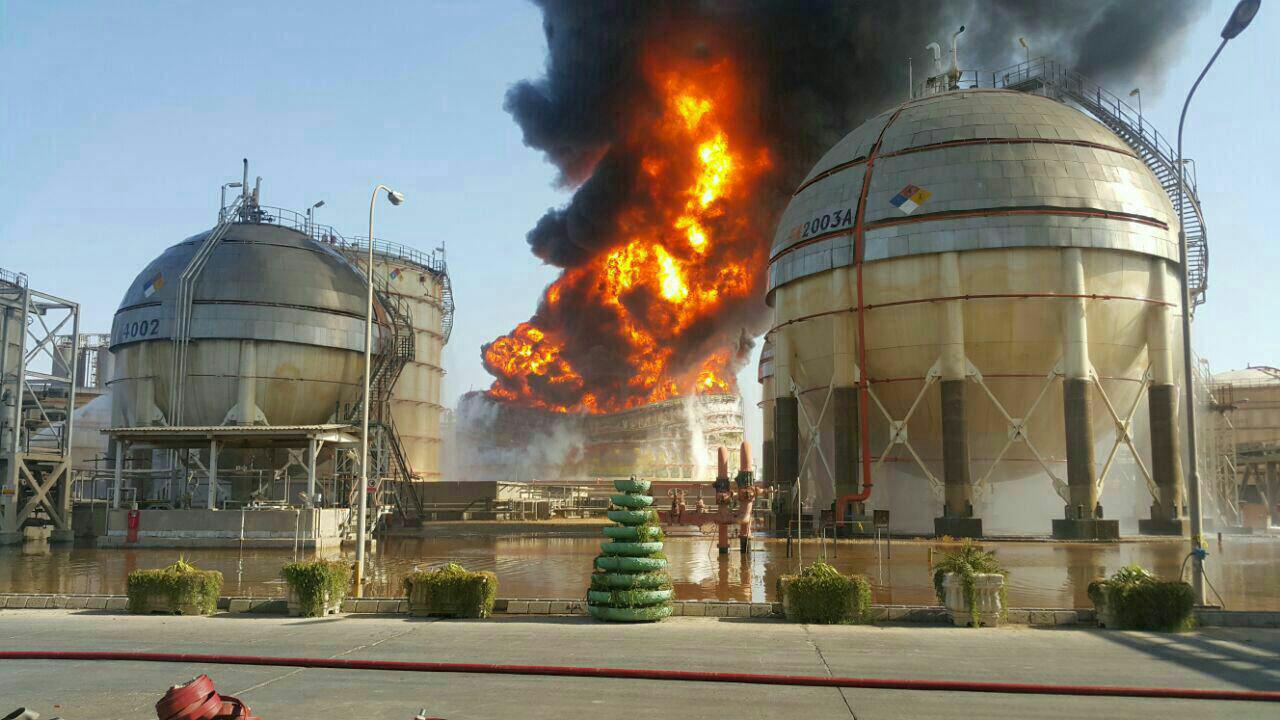
Amid escalating geopolitical tensions that have increasingly spilled beyond political and military domains into economic and infrastructure arenas, Iran’s strategic energy assets have come under direct threat. On the morning of April 4, the Mahshahr Petrochemical Special Economic Zone in Khuzestan province—one of the country’s most critical industrial and energy hubs—was targeted in a series of coordinated attacks. The incident marks a significant shift in the nature of confrontation, where key economic arteries and strategic infrastructure are deliberately targeted instead of conventional military engagements.
According to official reports, several major petrochemical complexes—including Fajr 1 and 2, Bu Ali Sina, Amir Kabir, Rijal, and Bandar Imam—were struck. The most critical damage, however, occurred at the Fajr Energy Khalij Fars facility, the primary supplier of electricity and steam to the entire zone. The disabling of its turbines led to a complete power outage, effectively shutting down production across all dependent industrial units.
The significance of the attack lies not merely in its physical destruction, but in its strategic targeting of a highly interconnected node within Iran’s petrochemical value chain. Mahshahr serves as a vital link between feedstock supply, processing, and export. Disruption at this hub creates cascading effects across the national economy, halting production, delaying exports, and undermining revenue streams.
This event underscores a shift in the pattern of threats against Iran’s economy. By focusing on utility infrastructure such as power and steam—rather than solely on production units—the attackers demonstrated an understanding of systemic vulnerabilities. Damage to these support systems yields disproportionately large consequences, effectively paralyzing entire industrial ecosystems.
In the immediate aftermath, production disruptions, temporary shutdowns of facilities and interruptions in export chains were reported. More broadly, the incident raises serious concerns about Iran’s energy security and the stability of its foreign currency revenues. The petrochemical sector has become a cornerstone of Iran’s economy, playing a central role in generating export revenues and maintaining macroeconomic balance.
Economic Warfare
From a strategic perspective, the attack can be interpreted as a distinct policy: economic warfare through disruption of value chains. Unlike traditional military strikes, this approach seeks to weaken economic resilience, create shocks in currency markets, and erode export capacity. It reflects a broader shift toward “infrastructure-centric economic warfare,” where industrial hubs and logistical chokepoints become primary targets.
The Mahshahr attack also follows a pattern of earlier strikes on oil storage and distribution facilities in Tehran and Alborz provinces, including depots in Shahran, Rey, Fardis, and Aghdasieh. These incidents collectively suggest a deliberate strategy aimed at undermining critical nodes in Iran’s energy supply chain.
What distinguishes the Mahshahr incident is its focus on a single critical point—utility supply—whose disruption can incapacitate an entire network. This highlights the urgent need for re-evaluating infrastructure design, implementing redundancy systems and enhancing industrial resilience.
Fajr Energy Khalij Fars, often described as the “beating heart” of the region’s utilities, has played an indispensable role since 1998. Any disruption to its operations effectively halts production across dozens of dependent facilities, illustrating that the target was not merely physical damage but systemic disruption.
The strategic importance of Mahshahr cannot be overstated. Spanning approximately 2,600 hectares and hosting 21 production complexes with a nominal capacity of 26 million tons, the zone accounts for nearly 40% of Iran’s petrochemical output. Its location along the Persian Gulf, access to international waters via Khor Musa, and connection to rail networks linking Turkey, Europe, and Central Asia make it a vital export hub.
Key facilities such as Bandar Imam Petrochemical Complex—one of the largest producers of olefins, aromatics, and chlor-alkali products—alongside Bu Ali Sina, Amir Kabir, and Rijal, form the backbone of both domestic industry and export markets.
In recent years, Iran’s petrochemical sector has evolved from selling crude oil toward higher value-added production. With over $29 billion in sales between late 2024 and late 2025, the sector has become a critical pillar of the national economy.