
Targeted strikes on Iran’s industrial infrastructure in recent days mark a significant escalation beyond conventional economic pressure, posing immediate and long-term risks to the country’s already fragile economy.
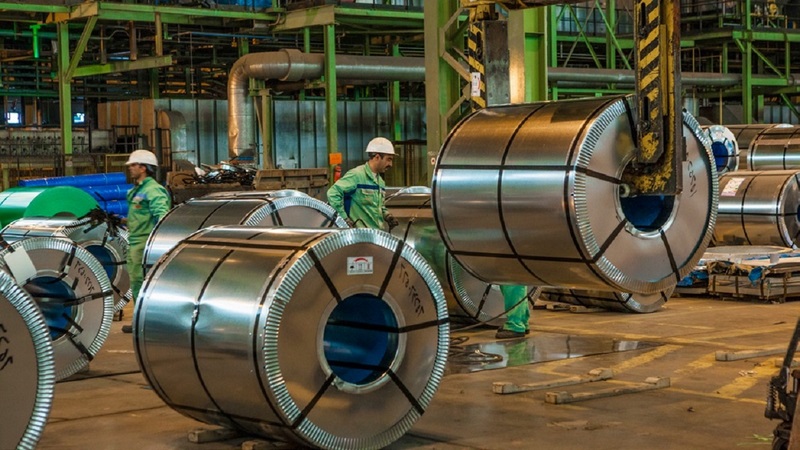
Reports of damage to major steel complexes, including Mobarakeh Steel Company in Isfahan and Khuzestan Steel Company, alongside attacks on power generation facilities, underscore a shift toward undermining the foundations of industrial production.
According to provincial authorities in Isfahan, two power plants with capacities of 914 MW and 250 MW were damaged in strikes affecting the Mobarakeh industrial zone. Parts of steel production workshops were also hit, disrupting operations.
These incidents are particularly consequential given the strategic role of steel as a backbone industry, feeding into construction, automotive manufacturing and a wide array of downstream sectors.
Industrial infrastructure is not easily replaceable. Each blast furnace, rolling mill and power unit represents years of capital investment, technological accumulation and human expertise. When such assets are damaged, the impact extends far beyond temporary production halts; it raises uncertainty about future output stability and undermines investor confidence in industrial continuity.
One of the most notable projects affected is the 914 MW F-class combined-cycle power plant associated with Mobarakeh Steel. Initiated in 2022 with an estimated investment of €425 million, the plant had reached roughly 82% completion and was expected to play a role in alleviating Iran’s chronic electricity imbalance.
Designed with two gas units and one steam unit, the facility was projected to reduce national power shortages by around 5% while improving fuel efficiency. Its partial damage not only delays energy supply improvements but also disrupts a project that symbolized domestic industrial capacity, involving dozens of local firms.
The immediate economic consequences are difficult to contain. Disruptions in steel output will likely ripple through dependent industries, constraining supply chains and raising input costs. Given steel’s centrality to construction and manufacturing, any sustained reduction in output could translate into broader industrial slowdown.
Employment effects are another pressing concern. Industrial shutdowns or reduced capacity could leave thousands of workers at risk of temporary or permanent job loss. This comes at a time when Iran’s labor market is already under strain, raising the likelihood of intensified social and economic pressures.
Inflationary risks are also mounting. Reduced supply of key industrial inputs combined with rising production costs typically leads to upward pressure on prices. In an economy already grappling with high inflation and currency volatility, such shocks could further erode household purchasing power.
Long-Term Implications
Beyond the immediate fallout, the longer-term structural implications are even more concerning. Rebuilding damaged infrastructure will require substantial financial resources and time—resources that could otherwise have been directed toward expansion and modernization.
Moreover, Iran’s industrial sectors are deeply interconnected; disruptions in steel and energy can trigger cascading effects across upstream and downstream industries, amplifying the overall economic impact.
These developments come against the backdrop of persistent structural challenges, including international sanctions, exchange rate instability and entrenched inflation. Such conditions limit the economy’s resilience, reducing its capacity to absorb additional shocks.
In this context, attacks on industrial and energy infrastructure are not merely tactical disruptions; they represent a strategic blow to Iran’s production capacity and future growth potential.
The consequences are likely to extend well beyond the immediate damage, shaping the trajectory of the country’s industrial economy for years to come.