
Iran’s financial markets in the Persian year 1404 (March 2025–March 2026) were defined by a clear divergence in performance, as capital flowed decisively toward safe-haven assets while equities lagged behind. Despite a rebound in global risk appetite, domestic investors increasingly prioritized protection against uncertainty, reshaping the hierarchy of returns across asset classes.
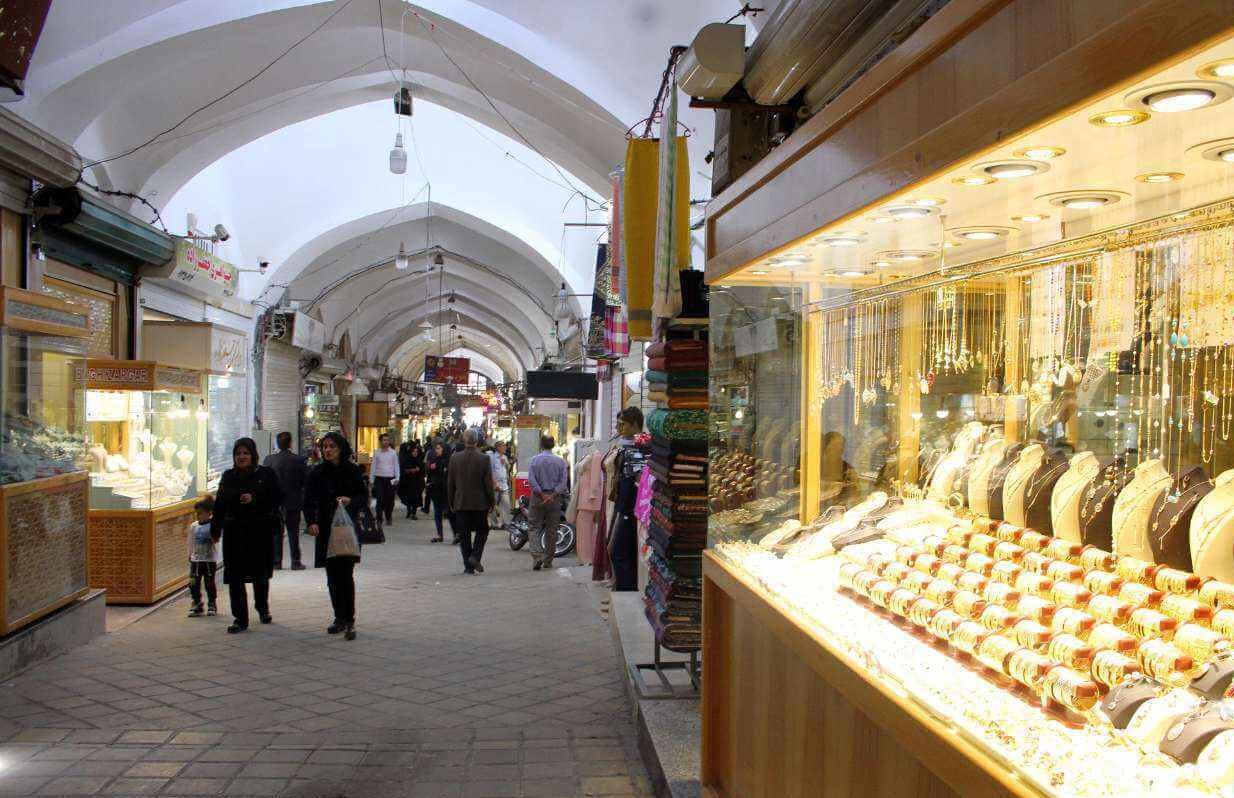
At the top of the leaderboard were gold-linked instruments, which delivered returns exceeding 100% over the year. Gold exchange-traded funds attracted more than 40 trillion tomans (about $267 million) in fresh capital, reflecting strong demand for inflation hedges and liquid stores of value. Even more striking was the performance of silver deposit certificates, which surged by over 300%, making them the best-performing asset in the market. Gold bullion and 18-karat gold instruments followed with gains of around 120%.
Fixed-income funds also ranked among the year’s winners. Offering returns of 37.4%, these funds attracted approximately 70 trillion tomans (about $467 million) in inflows. Their relatively low-risk profile made them particularly appealing during periods of heightened volatility, reinforcing a broader shift toward capital preservation strategies.
Equities Underperform
In contrast, equities underperformed relative to these alternatives. Tehran’s main stock index posted a 37% annual gain, while the equal-weight index rose just 19%, indicating weaker performance among smaller firms. Although these figures may appear respectable in isolation, they fell short compared to competing asset classes, leaving stocks near the bottom of the return spectrum.
The divergence was largely driven by geopolitical developments. The market experienced two major military escalations during the year, an unprecedented occurrence that significantly altered investor behavior. The first shock came in mid-June, when a military conflict triggered a sharp sell-off. The benchmark index, which had reached 3.25 million points on May 18, 2025, dropped to 2.395 million by August 30, 2025, a decline of about 26%.
Although equities later staged a recovery—supported by a weakening currency and export-driven earnings—the rebound proved insufficient to restore investor confidence. By January 19, 2026, the main index climbed to 4.491 million points, marking a second peak. However, renewed tensions in mid-January and rising risks of broader conflict reversed this trend.
Final Blow
The final blow came in late February, when renewed military strikes led to a 23-day market closure. By year-end, the main index stood at 3.371 million points, underscoring the fragility of equity gains in a high-risk environment.
Capital flows further illustrate the shift in market leadership. Retail investors withdrew over 60 trillion tomans (about $400 million) from equities during the year, redirecting funds toward gold and fixed-income instruments. This reallocation highlights a decisive move away from risk assets toward safer alternatives.
Currency movements added another layer to the story. A more than 100% increase in the effective exchange rate boosted corporate earnings in local currency terms, yet this tailwind failed to translate into sustained stock market outperformance. Instead, investors remained focused on downside risks, limiting the impact of improved fundamentals.
Late-year trends reinforced the broader pattern. In March 2026, the main index declined by 2.4%, even as gold and currency markets showed relatively weaker short-term performance. Meanwhile, fixed-income funds continued to attract inflows, including 3.5 trillion tomans (about $23 million) in a single day, reflecting persistent demand for stability.
Overall, the experience of 1404 highlights a market increasingly shaped by risk perception rather than pure economic indicators. While structural reforms such as exchange rate unification provided some support, they were overshadowed by geopolitical uncertainty.
As a result, Iran’s financial landscape has undergone a clear reordering: safe-haven and income-generating assets have emerged as the dominant winners, while equities have fallen behind. Unless political risks subside, this hierarchy is unlikely to change in the near term.