
Hamid Mollazadeh
Global oil markets have entered a new phase of extreme volatility as the escalating confrontation involving Iran, the United States and Israel disrupts energy flows across the Middle East, pushing crude prices to their highest levels since 2022 and raising concerns over a prolonged global supply shock.
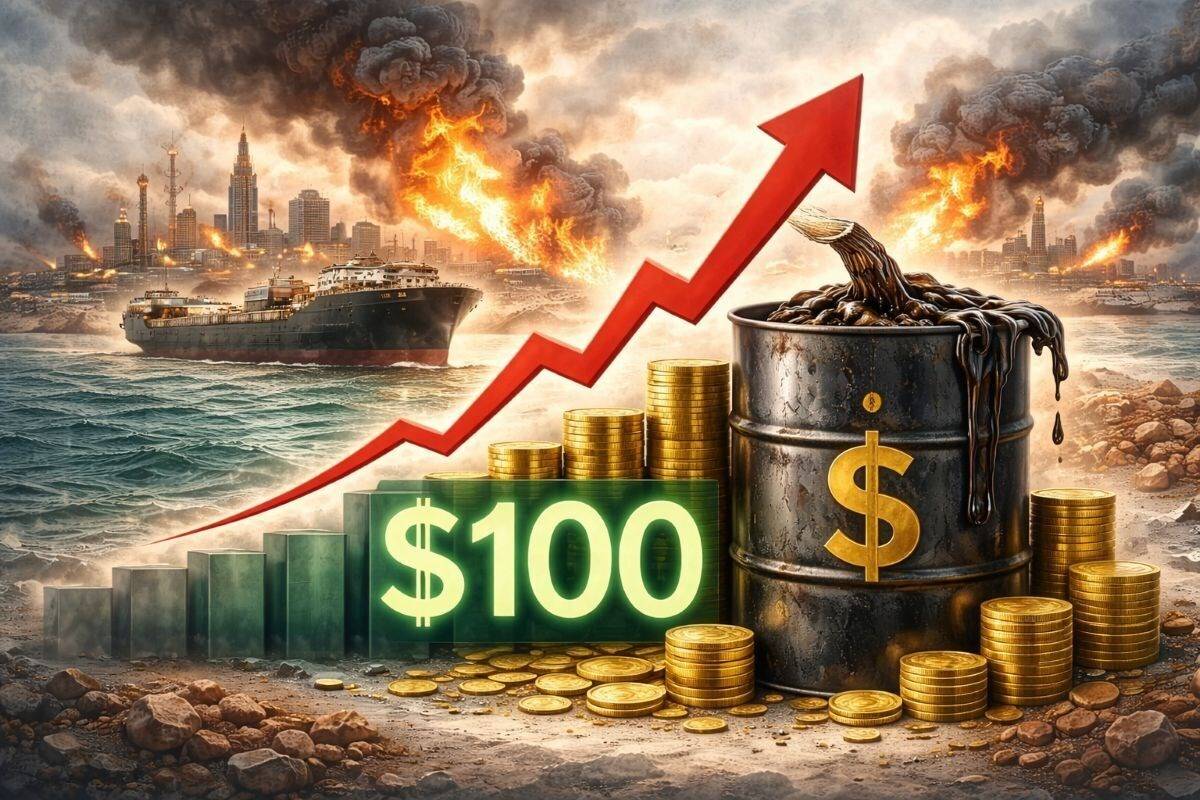
Brent crude, the international oil benchmark, surged sharply in Monday trading, briefly climbing to nearly $119 a barrel before easing back to around $104, according to data from Trading Economics. The rally marked a daily gain of roughly 15% and pushed Brent decisively above the $100 threshold, a level not seen since mid-2022.
The surge followed a dramatic week for oil markets. Brent prices had already climbed around 27% in the previous week, while US benchmark West Texas Intermediate (WTI) rose more than 36%. Combined, the moves represent one of the steepest short-term increases in oil prices since the early months of the Russia-Ukraine war, highlighting the scale of the geopolitical shock now gripping global energy markets.
The latest price spike is closely tied to fears that the widening Iran-US confrontation could severely disrupt oil exports from the Persian Gulf, the world’s most critical energy corridor.
At the center of the crisis lies the Strait of Hormuz, a narrow maritime passage through which roughly one-fifth of the world’s oil and liquefied natural gas normally flows each day. Since the escalation of hostilities, tanker traffic through the strait has faced increasing disruptions amid heightened security risks and military activity in the region.
Production Cuts Across Middle East
Adding to the market’s anxiety are significant production declines across several key Middle Eastern oil producers. In Iraq, one of OPEC’s largest exporters, crude output from the country’s three main southern oilfields has dropped sharply. Industry sources say production has fallen from roughly 4 million barrels per day before the conflict to around 1 million barrels per day, representing a decline of nearly 70%.
Kuwait has also begun reducing output at several oilfields and refineries. Kuwait Petroleum Corporation has declared force majeure on certain crude shipments, signaling that it may not be able to fulfill contractual export obligations because of circumstances beyond its control.
The United Arab Emirates has taken precautionary measures as well. Authorities say offshore production is being adjusted to manage storage constraints created by disrupted shipping, although onshore oil operations remain largely unaffected.
Meanwhile, Qatar—one of the world’s largest exporters of liquefied natural gas—cut LNG production last week after attacks on energy infrastructure, further tightening global energy supplies. Taken together, these disruptions have intensified fears of a broader supply crunch, particularly if the conflict continues to escalate.
Energy Infrastructure Under Threat
The widening conflict has also increased the vulnerability of energy infrastructure across the Persian Gulf region. In the United Arab Emirates, debris from an airborne object sparked a fire in the Fujairah oil industry zone, though no casualties were reported.
In Saudi Arabia, the defense ministry said it intercepted a drone heading toward the Shaybah oilfield, one of the kingdom’s major production hubs.
Bahrain has also been affected. The country’s national oil company, BAPCO, declared force majeure after an attack targeted its refinery complex. Reports indicate that Saudi Arabia has temporarily shut down its largest refinery following security concerns, adding further pressure on global fuel supply.
Governments around the world are beginning to implement emergency measures to limit the economic fallout from rising energy prices. South Korea, one of Asia’s largest energy importers, announced plans to introduce temporary price caps on petroleum products for the first time in nearly three decades.
Officials say the country has sufficient strategic oil reserves to cover roughly 208 days of consumption, providing a buffer against supply disruptions. Similar policy responses are being considered elsewhere as governments try to prevent energy inflation from spreading through the global economy.
Energy analysts warn that the current rally could mark the beginning of a new oil shock if the Iran-US conflict continues. Even if hostilities ease quickly, damaged infrastructure, disrupted shipping routes and heightened security risks across the Persian Gulf could keep oil prices elevated for weeks or even months.
With one of the world’s most vital energy corridors under pressure, the trajectory of the Iran-US confrontation may ultimately determine whether global oil markets stabilize—or face another period of sustained price volatility unseen since 2022.