
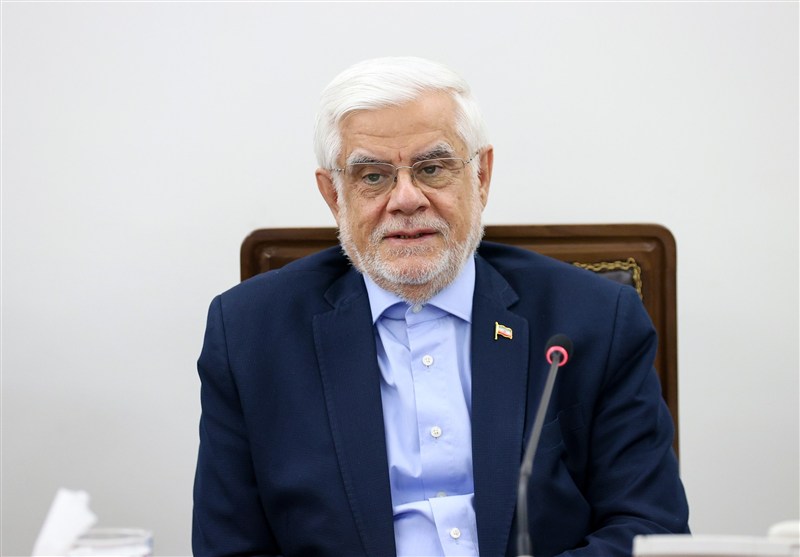
First Vice President Mohammadreza Aref said the country’s reserves of essential goods remain in a “very favorable” condition, as he conducted a series of surprise inspections on Wednesday, the fifth day since the start of Israeli and US attacks against Iran.
According to Tasnim News Agency, Aref visited two major chain stores, the Central Bank of Iran and the Government Discretionary Punishments Organization to assess the supply and distribution of basic commodities, market supervision mechanisms, and the provision of rial and foreign currency resources for essential goods and medicines.
Speaking during his field visits to the retail outlets, Aref cited reports presented by store managers and said current inventories of essential and other consumer goods were satisfactory.
He noted that the government had granted special authority to customs offices to accelerate the clearance of essential imports in recent days.
He acknowledged that concerns had initially emerged regarding the supply of medicines and medical equipment, but said the situation had since improved due to coordinated measures.
“Today, we have no concerns regarding the provision of essential and strategic goods needed by the public,” he said, adding that efforts are underway to expand reserves beyond approved levels, including through land border routes.
Referring to a temporary shortage of bottled water reported earlier this week, Aref said an immediate decision had been taken to address the issue, with petrochemical plants supplying the required raw materials. “The problem has been fully resolved,” he stated.
Key Priority
The first vice president emphasized that alongside supply and timely distribution, market supervision remains a key priority. He said monitoring must be conducted in a structured and coordinated manner, noting that while the vast majority of distributors and retailers operate within regulations, a small minority may attempt to exploit conditions.
Aref said trade associations are exercising oversight and government monitoring bodies are active, adding that the Discretionary Punishments Organization would take firm action against any violations. “There should be no expectation of leniency if abuses occur,” he said.
On logistics, Aref praised the minister of roads and urban development for efforts to expedite the transfer of essential goods from ports, noting that daily coordination is ongoing to prevent bottlenecks. He also highlighted the distribution capacity of chain stores, describing cooperation among institutions as strong.
The official further pointed to the delegation of expanded powers to provincial governors under Articles 127 and 138 of the Constitution, allowing them to take decisions at the provincial level equivalent to those made nationally. In cases requiring higher approval, he said, authorization can be granted by telephone before formal written notification.
Aref assessed the pace of essential goods supply as appropriate, adding that any localized shortages would be swiftly addressed. He cited an early issue involving poultry supply in some provinces, which he said was quickly resolved.
He expressed hope that producers and distributors would continue operating within regulatory frameworks, stressing that economic actors share responsibility in ensuring stability under current conditions.