
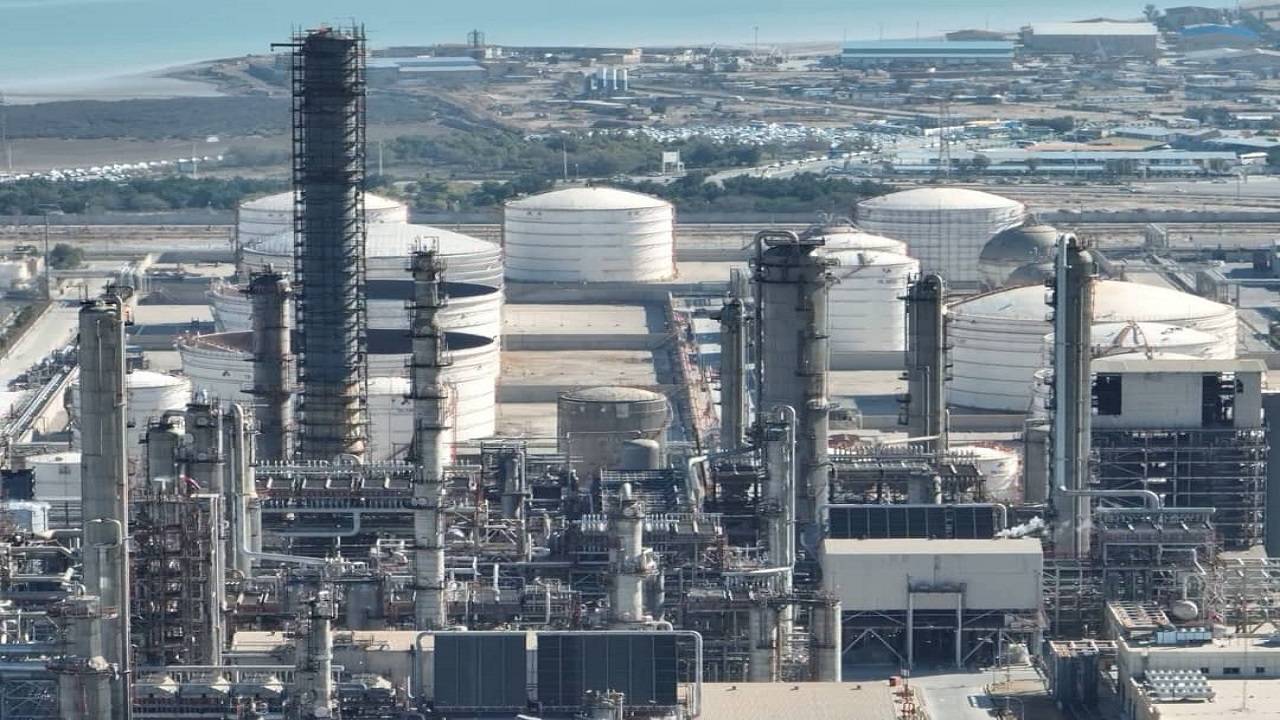
Iran’s petroleum industry marked a significant milestone in February 2026, surpassing the 100 million tons installed capacity threshold. However, beneath this impressive figure lies a concerning reality that urgently demands a strategic shift.
For years, reliance on the “gas-focused” development model has trapped the industry within a trap, grappling with both severe gas imbalance during winter and the production of semi-finished goods lacking high value addition.
Data indicate that Iran is now facing a daily gas deficit of approximately 300 million cubic meters. This means that gas-driven petrochemicals (primarily methanol and urea units) that constitute the primary driver of the current 100-million-ton capacity often experience feedstock disruptions for two to three months each year.
The government’s new strategy, evident in recent project inaugurations, prioritizes liquid feedstock like crude oil and natural gas liquids (NGLs). Although this approach has higher operating costs than cheap gas, it provides two major advantages. Liquid feedstocks are not affected by weather changes or household consumption patterns, which makes production more sustainable. In addition, while natural gas is mainly used to produce methanol and urea, liquid feedstock makes it possible to manufacture propylene, butadiene, and aromatics, the key building blocks of engineering polymers.
Analysis of customs data reveals that despite its export potential, Iran imports nearly 2 billion worth of petrochemical products annually.
These include engineering polymers, textile additives, catalysts and specialized medical grades. There is a surplus in the upstream product layer, nonetheless, the sector is facing significant lack in the midstream layers for products such as acrylic acid, polyurethanes, and specific SBR grades.
Alternative Schemes and Value Chain Completion
The second phases of Bushehr Petrochemical Complex, recently inaugurated by the president, is designed specifically to bridge this gap, focusing on olefins and MEG production.
Similarly, PDH (propylene derived from propane) projects under construction at ports in Asalouyeh and Mahshahr aim to address chronic shortages of propylene, a crucial component missing in advanced downstream industries like automotive and home appliances.
Completing the value chain is not just a need; it is a compulsion. While the price of each ton of basic petrochemical products fluctuates between $300 to $500, the price range for engineered polymers and downstream final products range from $1500 to $5000 per ton. Investing in downstream industries offers tenfold employment and safeguard it in international competition against giants like Saudi Arabia’s SABIC, which rapidly shifts toward direct conversion technologies.
Financing Challenges and Government Solutions
According to the Seventh Development Plan, the petroleum industry requires approximately $7 billion in annual investment to complete the value chain.
In light of sanctions and limited access to Western financing, the government has proposed several measures to address this need.
These include redirecting the accumulated profits of large petrochemical holdings toward development projects instead of cash distributions, leveraging financial resources available through regional agreements such as BRICS credit lines and Shanghai Cooperation Organization frameworks to facilitate license-based technology imports, encouraging private sector participation by offering long-term feedstock guarantees for small-scale value chain projects, and utilizing modern capital market instruments to channel funding into incomplete projects.
A Fortress Against Sanctions
Achieving the goal to produce 100 million tons of petrochemicals without strengthening the value chain could become a weakness.
The government’s focus on decreasing base product exports and fostering engineered polymer production not only addresses gas imbalance but also builds robust defenses against international pressures. Wider range of final customers for petrochemicals makes them largely immune to sanctions.