
Hamid Mollazadeh
In a country where fuel policy is tightly interwoven with economic stability and public welfare, even subtle technological shifts can carry national significance.
Nearly two decades after launching its first smart fuel card system, Iran is now embarking on what officials describe as the most consequential digital upgrade of its gasoline distribution network in a generation—a transformation that could redefine how subsidies are managed, transactions are monitored and energy infrastructure is secured in an era of mounting fiscal and geopolitical pressure.
The country’s original smart fuel system, introduced roughly 18 years ago by a European provider, was designed to manage consumption, implement gasoline rationing and curb the burden of energy subsidies.
Over time, it became a central pillar of fuel policy, enabling authorities to track usage and control subsidized volumes. But aging hardware, rising maintenance costs and technical limitations have increasingly strained the system.
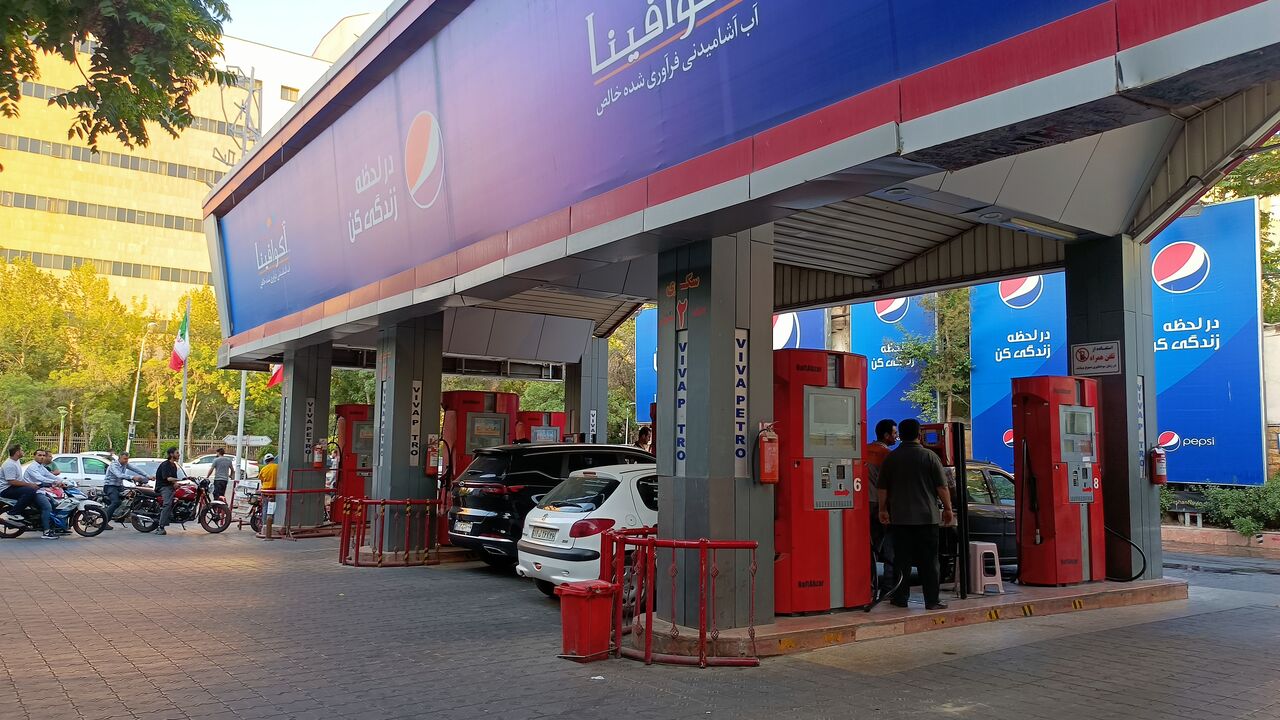
Now, Iran is preparing to roll out a fully domestically developed platform across approximately 5,000 active fuel stations by the end of the current year.
According to Keramat Veis Karami, CEO of National Iranian Oil Products Distribution Company, the new system relies entirely on Iranian hardware and software—a move that not only modernizes infrastructures but also reduces reliance on foreign suppliers.
Shift in Architecture
At its core, the upgrade represents a shift in architecture. Under the previous model, fuel dispensers displayed detailed pricing information in real time, showing how much of a driver’s purchase fell under different subsidized tiers—for example, 60 liters at one price and additional liters at higher rates. Calculations were processed locally at the station level. The new system centralizes those computations.
Under the redesigned process, the pump displays only the volume dispensed. Once fueling is complete, the driver proceeds to a point-of-sale terminal and enters the number of liters consumed rather than a monetary amount. The transaction is then transmitted to a centralized payment switch housed within the Ministry of Economic Affairs and Finance. There, the software automatically calculates how much fuel is deducted from each pricing tier—currently set at 1,500 tomans (0.9 cent), 3,000 tomans (1.8 cents) and 5,000 tomans (3 cents) per liter—before returning the final charge to the payment terminal for settlement.
Structural Advantages
Officials say this software-based, centralized model delivers several structural advantages. By eliminating a portion of local data processing, it reduces wear and tear on station equipment and lowers maintenance costs over time.
Concentrating calculations in a single national switch also enhances accuracy in quota management—a critical factor in a country where fuel subsidies have major fiscal implications.
The new architecture is also designed to integrate more seamlessly with the banking network, expanding the scope for electronic payments and improving transaction transparency.
Centralized data aggregation, authorities argue, will enable real-time monitoring of fuel flows nationwide and strengthen oversight in one of the country’s most sensitive service networks.
A three-month pilot installation on Kish Island reportedly operated without a single technical fault, paving the way for nationwide deployment.
Importantly, officials emphasize that while the back-end system is being fundamentally reengineered, the consumer experience will remain largely unchanged. Drivers will continue to insert their smart fuel cards and fill up as before; the complexity lies behind the scenes.
For Iran, the project is more than a technical upgrade. It represents a strategic recalibration of a critical national system—one that underpins subsidy reform, fiscal management and social stability.
If executed on schedule, the new architecture will not only modernize the mechanics of fuel distribution but also deepen state oversight and digital control over one of the country’s most economically sensitive sectors, reinforcing resilience at a time when energy governance remains central to Iran’s broader economic strategy.