
Hamid Mollazadeh
Global oil markets are once again reacting to rising tensions between Tehran and Washington. Military drills, diplomatic statements and shifting political signals have injected fresh volatility into crude trading. Yet despite the headlines, traders appear to be operating under a critical assumption: oil flows, particularly through the Strait of Hormuz, will continue uninterrupted.
Brent crude settled at $71.60 a barrel on February 20, its highest close since August 2025, after jumping 7%. The rally followed reports of joint Iranian-Russian naval exercises in the Sea of Oman and the northern Indian Ocean, conducted shortly after Iranian maneuvers in the Strait of Hormuz itself.
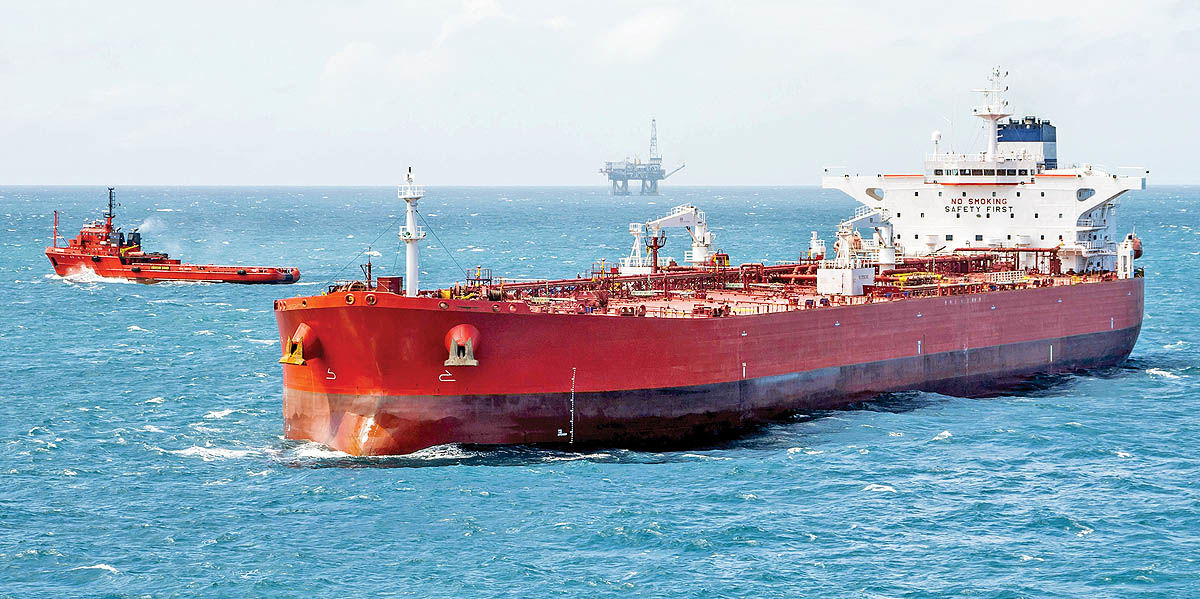
The strategic waterway carries roughly 20% of global daily oil supply—about 20 million barrels per day—making any military activity in its vicinity immediately market-sensitive. Even so, the broader trading pattern reveals hesitation rather than panic.
Over the past 14 sessions, Brent has recorded eight gains and six losses, underscoring a market that lacks a clear directional conviction and is reacting primarily to geopolitical signals.
Iran Risk Premium
Analysts estimate that between $7 and $10 per barrel of Brent’s current price reflects a geopolitical “Iran premium.” This represents the additional cost traders assign to the risk that negotiations between Tehran and Washington could collapse, potentially leading to military escalation.
However, the relatively contained size of that premium is telling. If markets believed that the Strait of Hormuz faced imminent closure, or that Persian Gulf energy infrastructure was likely to suffer widespread damage, the premium would be substantially larger—potentially pushing crude prices dozens of dollars higher.
Instead, the prevailing view is that even in the event of limited military confrontation, major oil production facilities and export routes would remain largely intact. In other words, traders are hedging against tension—not pricing in a supply shock.
Decades of Instability
The logic rests on both history and economics. Despite decades of instability in the Middle East, sustained and large-scale supply disruptions have been rare. Even during periods of direct conflict, oil exports have often continued, as producers depend heavily on hydrocarbon revenues.
Shutting down Hormuz would not only strain global markets but would also severely damage the economic interests of regional exporters. From a market perspective, it is assumed that no major stakeholder ultimately benefits from halting the flow of crude.
Two Core Scenarios
Current pricing appears to reflect two main outcomes.
The first is a limited or phased diplomatic agreement that prevents escalation. Such a deal could involve tighter oversight of Iran’s nuclear activities in exchange for partial sanctions relief. Under this scenario, the geopolitical premium would gradually fade.
The second scenario assumes negotiations fail and the United States opts for targeted military action. Yet even here, markets appear to believe that any operation would be calibrated to avoid triggering a prolonged energy shock. Oil infrastructure would likely be spared, and shipping lanes would remain open.
What remains underpriced, according to some analysts, is a broader escalation that deliberately targets regional energy assets or disrupts maritime transit. Such an outcome could quickly redefine price levels. For now, however, it is viewed as a lower-probability risk.
A Market Balancing Risk and Restraint
Oil prices today reflect a careful balancing act. Traders acknowledge geopolitical tension and have embedded a measurable premium into crude benchmarks. But they are not positioning for a sustained disruption of supply.
As long as diplomatic channels remain open and military activity stops short of damaging energy infrastructure, the market’s core assumption—that oil will continue flowing through the Strait of Hormuz—is likely to hold.
Still, in a region where developments can shift rapidly, that assumption remains subject to sudden repricing.