
Neda Vahidi
In early February, the Iranian government announced a policy allowing women to receive motorcycle licenses, a step long resisted by conservative factions.
The move was presented as a way to provide women legal access to riding and associated rights such as insurance coverage. It came just weeks after nationwide unrest, during a period of social grief and heightened tension.
Before this, women were not formally allowed to ride motorcycles, and the issue of licenses has only gained attention in the past year or two as more women began using motorcycles for commuting, errands, and personal mobility. For many, riding represents both independence and practicality in crowded urban environments.
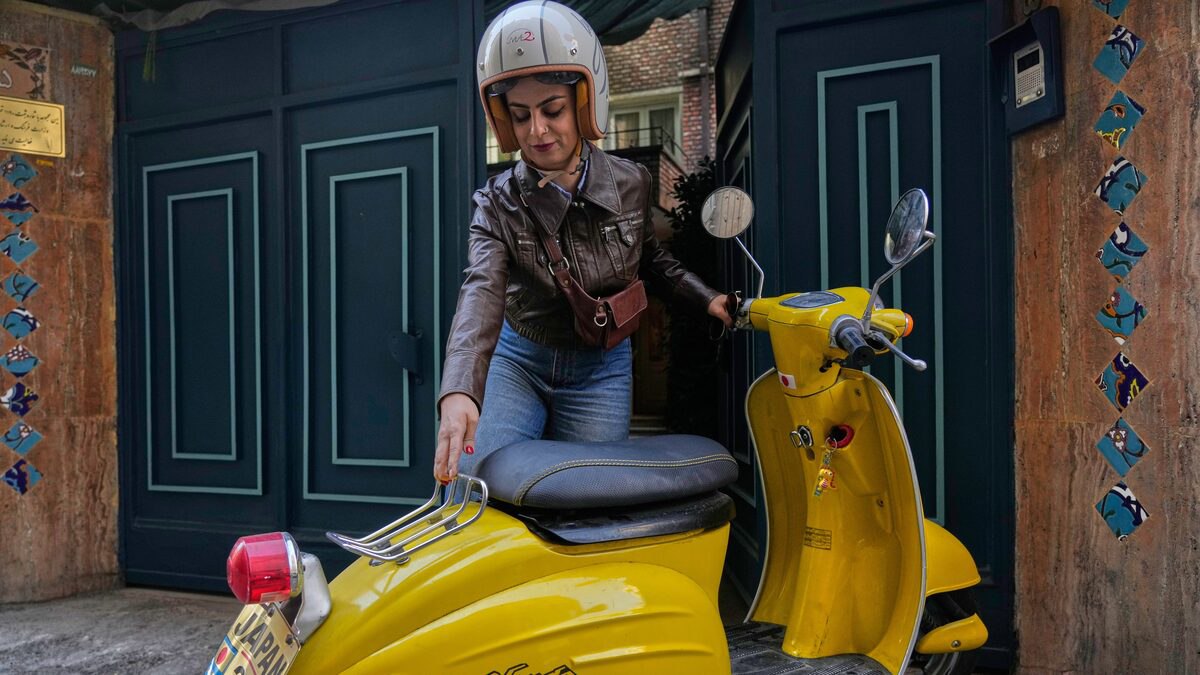
Nasim, a female motorcyclist, described her growing interest in riding. “I first became drawn to motorcycles when I saw a group of riders on a northern highway,” she said. “It was inspiring. For me, riding—especially heavy bikes—represents independence and control. When I ride, I feel stronger and more capable.”
When the license announcement came, her reaction was measured. “I had been hoping for this news, but by the time it was announced, I wasn’t as excited. For those of us already riding, it doesn’t change our routines much. But it could help others ride more safely and legally.”
She added that her main concern remains interactions with law enforcement. “Even with rules in place, I always adjust my route if I see the police. It’s a constant awareness.”
Motorcycle dealers and trainers also saw the announcement through a practical lens. Some had already been running classes and selling bikes to women before the official policy.
“We had promotions and special offers for female riders for months,” said one dealer. “The license would make it easier for women to take these courses and buy motorcycles without legal worries. It would boost business, but our work didn’t wait for the policy.”
One trainer echoed this view, noting that women had been attending lessons in small groups and riding safely under supervision long before formal approval.
Implementation Uncertainty
Despite the announcement, parliamentary discussions in the past two weeks have raised questions about whether the cabinet can implement the policy fully without additional legal revisions.
As a result, the timeline for licensing programs and broader rollout remains unclear. Training centers continue to operate, and some women attend courses, but the formal process has not yet reached full execution.
For Nasim and many like her, the policy reflects a symbolic recognition of women’s mobility rights, even if practical changes are gradual.
“It’s a start,” she said. “It shows that women’s needs are on the agenda, but the reality of everyday life—commuting, work, family responsibilities—doesn’t pause for policy debates. We adapt, we ride, and we wait for the framework to catch up.”
This episode is part of a broader shift in Iranian urban life, where women increasingly seek independent ways to move around cities safely and efficiently.
For some, motorcycles offer freedom and autonomy; for others, they provide a practical tool for navigating economic pressures and daily obligations.
For now, dealers, trainers, and enthusiasts have developed workarounds and support networks that allow women to ride, even before the government’s measures take effect.