
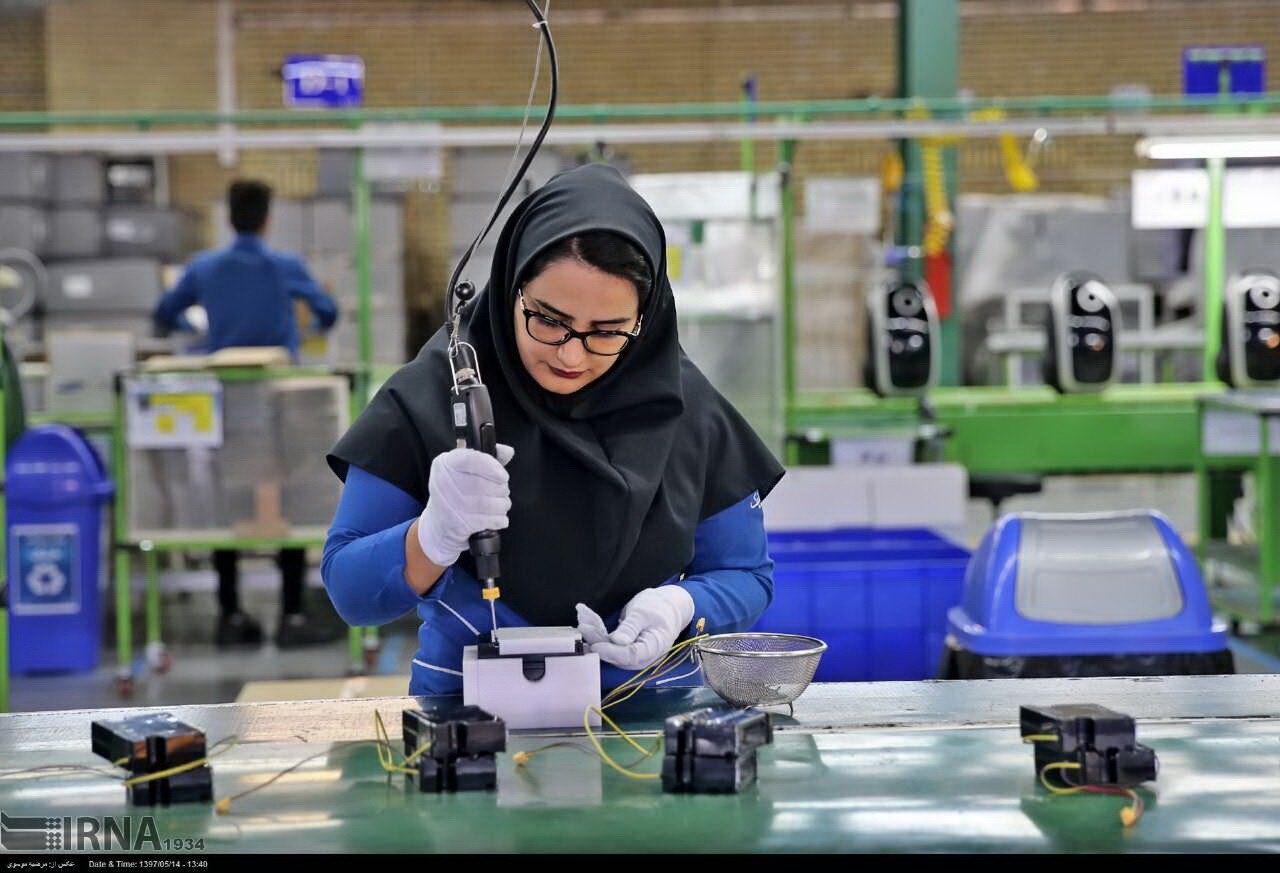
Women’s employment has emerged as the clearest casualty of Iran’s deteriorating labor market in autumn 1404 (autumn 2025).
The latest labor force survey shows not only rising unemployment but a structural retreat of women from economic activity—an outcome that signals deeper fragilities in labor demand and macroeconomic stability.
According to data released by the Statistical Center of Iran, more than 287,000 women lost employment compared with the same season a year earlier.
Female unemployment rose by 2.3 percentage points to 16%, while over 212,000 women exited the active labor force altogether.
These figures point not merely to job losses but to a growing wave of discouraged workers—individuals who have abandoned job searches amid shrinking opportunities.
The broader labor market context reinforces this concern. Overall unemployment among individuals aged 15 and above rose to 7.8% in autumn 1404 (autumn 2025), up 0.6 percentage points year-on-year.
At the same time, the labor force participation rate declined to 40.7%, indicating that a portion of the working-age population is no longer seeking employment.
Dual Deterioration
The simultaneous rise in unemployment and decline in participation suggests a dual deterioration: more individuals are losing jobs, and others are losing hope of finding one.
Employment capacity has also weakened. Total employment fell by approximately 126,800 individuals, bringing the number of employed persons to 24.86 million in autumn 1404 (autumn 2025).
This contraction occurred despite an increase of more than 815,000 in the working-age population over the same period, highlighting a widening gap between labor supply growth and job creation.
Women have borne a disproportionate share of this adjustment. Their greater exposure to temporary, part-time, and less secure forms of employment makes them more vulnerable during periods of economic stress.
In conditions of uncertainty, firms tend to reduce labor costs by cutting positions perceived as more flexible or replaceable—roles that women frequently occupy. As a result, cyclical downturns translate into structural setbacks for female participation.
Macroeconomic instability provides the backdrop to these developments. A series of shocks—including the 12-day conflict in summer 1404 (summer 2025), persistent energy imbalances, repeated power and gas disruptions, internet outages, and heightened geopolitical tensions—has undermined business confidence.
Under conditions often described as “neither war nor peace,” investment incentives weaken, production capacity contracts, and hiring slows. Employers respond by postponing expansion and, in many cases, downsizing existing workforces.
Sectoral employment shifts further illustrate the uneven adjustment. Employment declined in agriculture by more than 56,000 positions and in industry by over 120,000 in autumn 1404 (autumn 2025).
While the services sector recorded a net increase of about 52,000 jobs, this growth did not benefit women; female employment in services fell by more than 161,000. Even in expanding sectors, therefore, job creation has not been inclusive.
Declining Labor Quality
Labor quality indicators also signal strain. The rate of underemployment rose to 7.9% in autumn 1404 (autumn 2025), reflecting an increase in workers employed fewer hours than desired.
Such trends typically emerge when firms attempt to maintain output while minimizing labor costs, reinforcing the interpretation of a demand-constrained labor market.
Beyond gender disparities, educational composition has shifted. Workers with lower levels of education experienced larger employment losses, while the share of employed individuals with higher education increased to 27.7% in autumn 1404 (autumn 2025). This pattern suggests that economic shocks are accelerating a selective restructuring of labor demand toward more skilled workers.
The contraction of women’s economic participation carries implications beyond labor statistics. Female income has increasingly supported household budgets amid declining real purchasing power. Their withdrawal from the labor market therefore risks amplifying household vulnerability, reducing consumption resilience, and widening structural inequalities.
Autumn 1404 (autumn 2025) thus reflects more than cyclical weakness; it reveals a labor market shaped by persistent uncertainty and constrained job creation.
Without a restoration of macroeconomic stability and a revival of investment incentives, employment recovery—particularly for women—will remain limited.
The data suggest that when economic shocks accumulate in Iran, women are not only the first to lose jobs but also the most likely to disappear from the workforce altogether, leaving a quieter but deeper imprint on the trajectory of economic growth.