
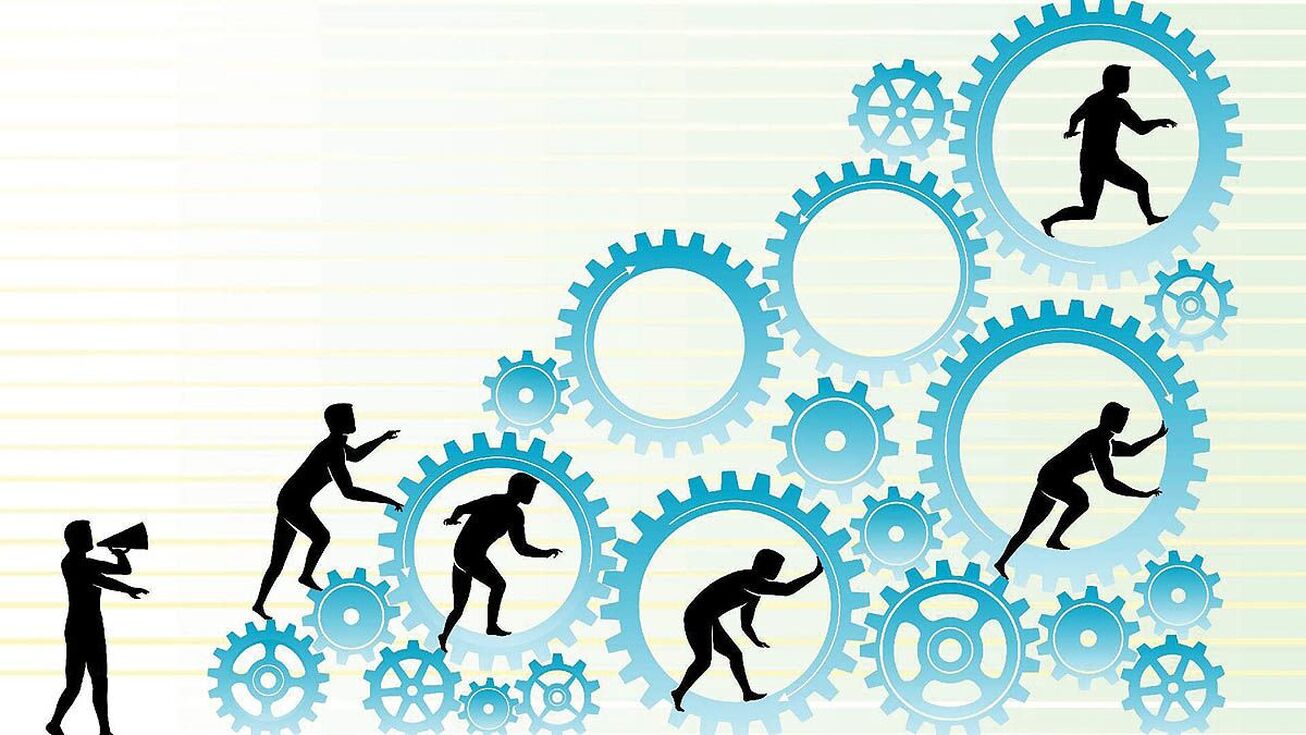
Economic governance is the invisible backbone of any economy. While it does not directly appear in headline figures such as growth, inflation or investment, it shapes the direction, stability and quality of all of them.
In Iran’s case, the core challenge of recent decades cannot be reduced solely to external shocks, sanctions or episodic policy missteps. A deeper issue lies in the gradual erosion of economic governance—a deterioration reflected in chronic instability, sharp volatility, pervasive uncertainty and a steadily shrinking decision-making horizon for economic actors.
A recent report by the Research Center of the Iran Chamber of Commerce underscores this structural concern. Assessments of indicators related to government effectiveness, macroeconomic stability, governance quality and corruption control suggest that Iran’s standing has been weak across the board, with further deterioration in several areas in recent years.
The findings point to a broader shift: the economy appears to have entered a regime of low-capacity governance, where even minimum levels of coordination and predictability are difficult to sustain.
In an effective governance system, the “rules of the game” are relatively stable, policies are predictable and institutions are capable of coordinating decisions.
The state focuses less on ad hoc interventions and more on regulation, transparency and systemic risk management. When these institutional foundations weaken, policymaking turns reactive—a series of fragmented responses aimed at containing daily crises rather than constructing a coherent development path.
Dual Decline
Iran’s experience between 2011 and 2023 illustrates this dynamic. Composite indicators of economic governance not only trended downward but also became more volatile.
This dual decline—in both quality and stability—has tangible economic consequences. Firms shorten their planning horizons, adopt defensive strategies and scale back long-term investment.
Resources drift toward low-risk, nonproductive or rent-seeking activities, as the unpredictability of fiscal, monetary, exchange-rate and trade policies undermines confidence in durable commitments.
Crucially, economic governance is not synonymous with the size of government or public spending levels. It is about the quality of policymaking processes: institutional coordination, transparency, accountability, rule of law, corruption control and the level of trust between the state, the private sector and society.
In Iran, declining institutional quality has created a self-reinforcing cycle. Weak policy implementation erodes trust; diminished trust makes subsequent reforms harder to execute; implementation gaps open space for rent-seeking and special interests; and the spread of such practices further weakens governance capacity.
Corruption perception indicators reinforce this diagnosis. Iran has remained in the lower tiers of administrative integrity rankings, with signs of further slippage in recent years.
Corruption in this context is not merely a legal or ethical deviation; it signals malfunctioning governance mechanisms.
Decisions influenced by informal networks or narrow interests divert resources from productive uses and sap public confidence, reducing the willingness of businesses and citizens to engage constructively in development efforts.
Pivotal Variable
Policy credibility emerges as a pivotal variable. Policymakers can shape expectations and behavior only if their commitments about the future policy path are perceived as credible.
Frequent rule changes, policy reversals and sudden interventions erode this credibility. Even well-designed reforms lose effectiveness when economic actors view them as temporary or politically fragile.
The implication is clear: before launching ambitious reform packages, the institutional platform of decision-making itself must be repaired.
Governance reform is not a complement to economic reform—it is its precondition. Moving from reactive, short-term measures toward rule-based, stable frameworks with clear time horizons is essential to reducing uncertainty and restoring predictability.
Rebuilding credibility requires consistency in implementation, avoidance of repeated reversals and adherence to announced rules.
The government’s role needs recalibration—from direct micro-level intervention toward transparent regulation, macroeconomic stabilization and systemic risk management.
Equally important is strengthening institutional coordination, clarifying responsibilities, reducing overlapping mandates and aligning policy design with implementation capacity.
Finally, the social dimension of governance cannot be ignored. Sustainable reform depends on institutionalized channels for dialogue, feedback and conflict management among the state, the private sector and society.
Transparency, performance evaluation and the possibility of policy adjustment based on feedback can gradually restore social capital and public trust.
Without this foundation, even technically sound reforms risk failure. For Iran, the path to durable economic stabilization runs through the reconstruction of governance itself.