
Hamid Mollazadeh
When Iran’s fourteenth administration took office in July 28, 2024, the oil and gas sector stood at a critical crossroads. On one side, the gradual pressure decline at South Pars—the country’s most strategic gas field—posed a looming threat to long-term energy security. On the other, the persistent flaring of associated gas was literally burning billions of dollars’ worth of national wealth every year.
Rather than pursuing short-term production hikes, the government articulated a different doctrine: sustainability of output, reduction of waste and completion of the energy value chain. The portfolio of projects signed or brought on stream during 2024 and 2025 reflects this shift in strategic thinking, signaling a strategic reconfiguration of Iran’s energy governance.
South Pars: Insuring the Gas Backbone
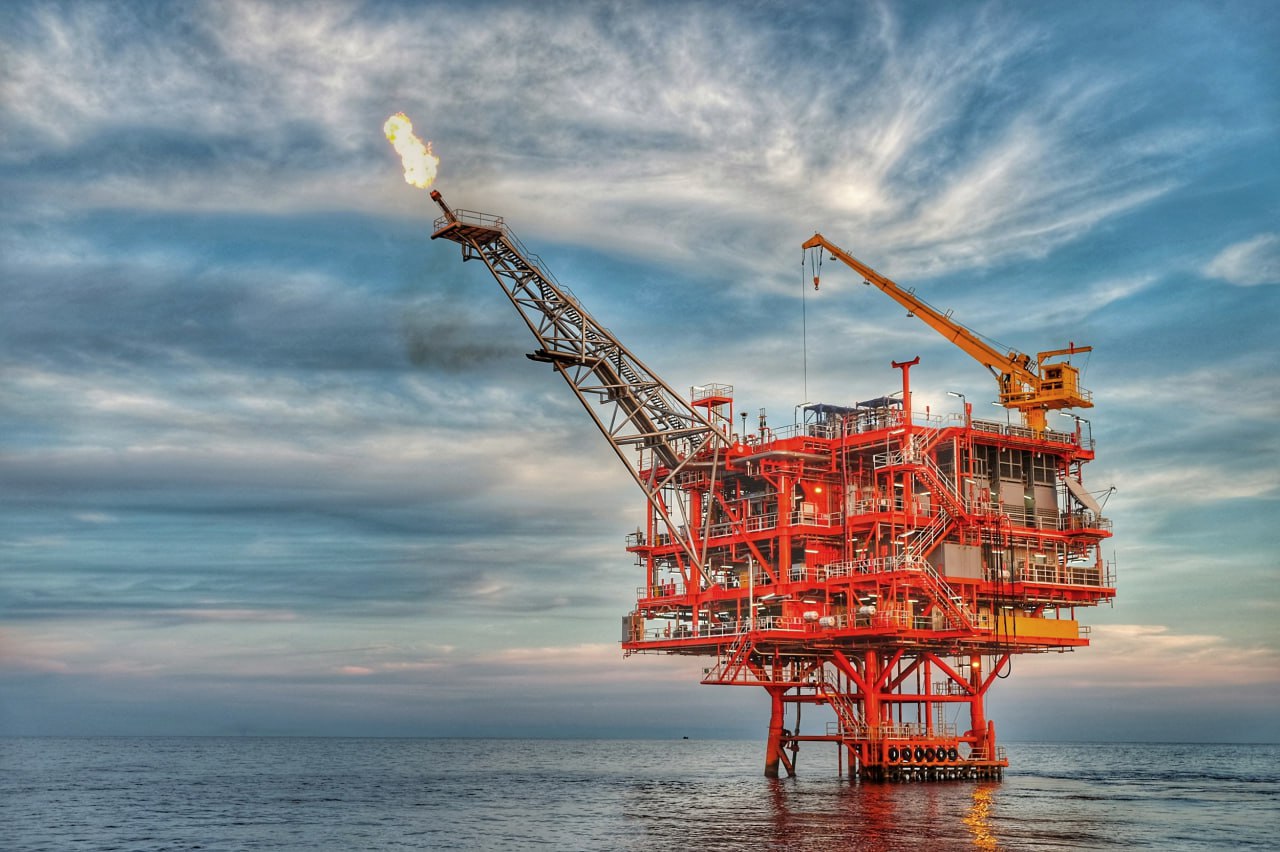
The most consequential step came in March 2025 with the signing of $17 billion worth of pressure-boosting contracts for the South Pars gas field in the Persian Gulf.
This was not a routine upstream development. South Pars supplies the backbone of Iran’s gas consumption and as the field ages, natural pressure decline threatens to disrupt the country’s energy balance. Failure to act would have translated into declining output, higher import risks and mounting pressure on downstream industries.
The pressure-boosting plan divides the field into seven hubs, each requiring roughly 60,000 tons of offshore structures. In total, about 420,000 tons of massive marine equipment will be installed, most of it manufactured domestically. Beyond stabilizing production, the project carries a strong industrial dimension, generating an estimated 17,000 direct and nearly 50,000 indirect jobs.
In this sense, South Pars pressure boosting is less about raising short-term volumes and more about safeguarding the future of Iran’s gas-dependent economy—an insurance policy against a structural energy crisis.
Capturing Associated Gas
The same logic underpins the government’s renewed push to eliminate gas flaring, one of the oil sector’s longest-running inefficiencies.
In August 2025, the long-awaited NGL 3100 project in southern Ilam Province came online. Valued at $1.6 billion, the project includes a processing complex, compressor stations, a 100-megawatt power plant, and hundreds of kilometers of pipelines. Its impact is immediate: 240 million cubic feet per day of gas that was previously flared is now recovered and fed into industrial supply chains.
This shift delivers a triple dividend. Environmentally, it curbs air pollution and carbon emissions. Industrially, it boosts feedstock availability for petrochemical plants. Economically, it converts wasted energy into a stable revenue stream.
Momentum continued in November 2025 with the signing of contracts to collect flare gas from 12 oil fields in the southern oil-rich regions. Once operational, the project will extinguish 32 flares and recover an additional 295 million cubic feet of gas per day. For the first time, the long-stated goal of “zero routine flaring” has entered an executable, time-bound phase.
West Karun: Growth With Efficiency
Production growth has not been abandoned, but it is being redefined. In January 2026, the second phase of the central processing facility at South Azadegan—part of the West Karun cluster in Khuzestan Province —was commissioned.
Now the largest oil processing center in the country, the facility’s completion raises total capacity to 320,000 barrels per day. Crucially, this expansion improves operational flexibility across the region, freeing up roughly 60,000 barrels per day of capacity from other units.
Equally significant is the environmental dimension. About 5.6 million cubic meters of associated gas per day from South Azadegan will be collected and sent to the Hoveyzeh gas refinery. The result is a rare alignment of objectives: higher oil output paired with lower emissions and better resource utilization.
Managing Natural Decline
By late January 2026, the National Iranian Oil Company signed contracts exceeding $2.5 billion, with a strong emphasis on preventing natural production decline. Under this program, 20 onshore drilling rigs will be deployed to drill 270 new wells over five years. In parallel, processing service contracts were awarded to expand capacity at six oil fields, adding 315,000 barrels per day to national processing capability.
This focus marks a conceptual shift. Rather than chasing headline capacity numbers, policymakers are prioritizing reservoir management, well integrity and processing efficiency—areas that are often less visible but far more critical for sustaining output over time. In mature oil provinces, preventing decline can deliver greater economic value than discovering new fields.
A Coherent Energy Strategy Emerges
Taken together, these initiatives present a markedly different picture of Iran’s energy policy. Projects are no longer defined solely by extraction targets. Instead, they advance along four interconnected axes: stabilizing gas production, improving oil efficiency, capturing wasted energy and strengthening downstream industries.
This integrated approach suggests a move away from the old paradigm of “production at any cost” toward what could be described as intelligent resource management.
The implications extend beyond barrels and cubic meters. By reducing flaring, the government addresses environmental liabilities. By stabilizing South Pars, it protects households and industries from future gas shortages. By investing in domestic manufacturing and drilling capacity, it reinforces local supply chains and employment in oil-producing regions. And by emphasizing efficiency, it aligns energy policy more closely with long-term economic resilience.
After one year, the fourteenth administration’s record in oil and gas points to a deliberate architectural redesign of the sector.
Whether this framework can withstand external pressures—sanctions, market volatility and capital constraints—remains an open question. But the direction is clear: energy resources are being repositioned not as exhaustible rents, but as strategic assets to be managed, preserved and leveraged for sustainable growth.