
Hamid Mollazadeh
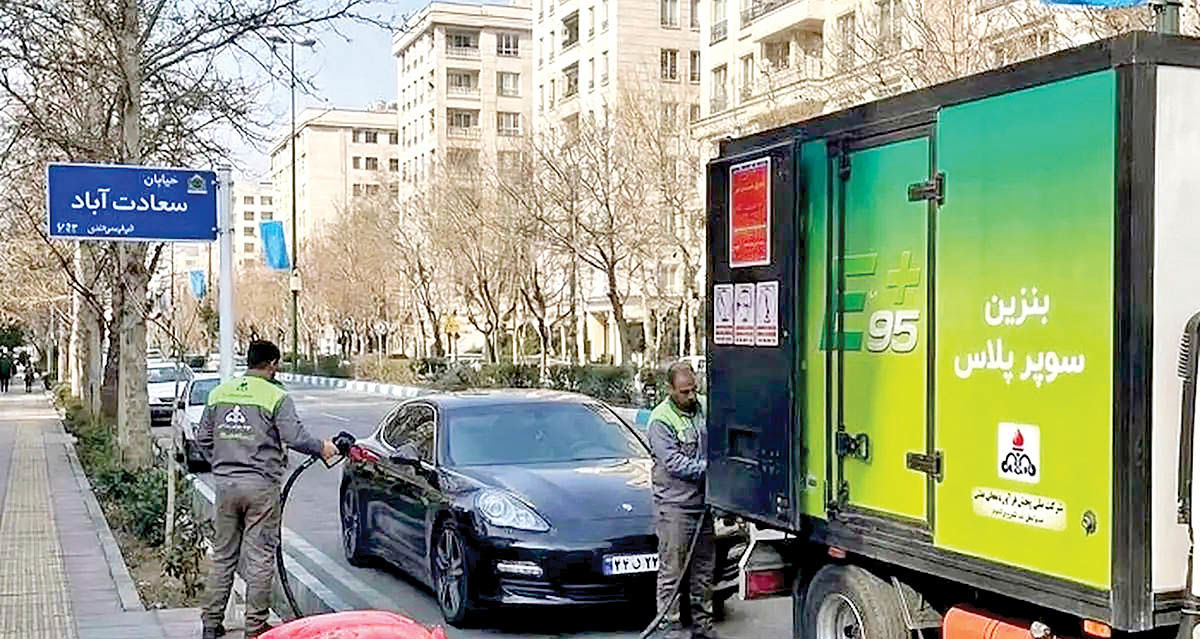
The Iranian fuel market is once again under the spotlight after the latest rise in the base price of imported premium gasoline offered on the Iran Energy Exchange (IRENEX).
The latest supply notice shows that the base price of premium gasoline has increased by around 4.4 cents, pushing the price to approximately 46 cents per liter—a noticeable jump in a market already sensitive to price signals.
The increase comes at a sensitive moment. While policymakers continue to stress fuel consumption reform and the expansion of control tools such as the smart fuel card system, the renewed upward move in premium gasoline prices is sending mixed signals to consumers and market participants alike.
On the one hand, it suggests a gradual move toward freer pricing in specific segments of the fuel market. On the other, it raises fresh questions about demand sustainability and the limits of government intervention in a market already strained by rising household costs.
Premium gasoline occupies a distinct and fragile niche in Iran’s fuel economy. Unlike regular gasoline, demand for this higher-grade fuel reacts quickly and visibly to price changes.
As a result, the latest increase could carry two contradictory messages: continued commitment to partial price liberalization and growing uncertainty over how much demand the market can realistically absorb amid broader inflationary pressures.
Price Turbulence
Price volatility has defined recent premium gasoline offering on the energy exchange. The first offering in early December was set at a base price of 65,800 tomans per liter (41 cents), but the fuel ultimately reached end consumers at 83,700 tomans per liter or roughly 52 cents.
A month later, the base price was raised to 69,500 tomans or 43 cents, but weak interest from distribution companies forced policymakers to retreat and revert to the earlier pricing level. Now, the upward trajectory has resumed, though this time alongside a notable cut in supply volumes.
The latest notice reduces the offered volume of imported premium gasoline to 300,000 liters, down from 510,000 liters in the previous round.
This contraction appears to reflect official caution in the face of limited demand, reinforcing the perception of premium gasoline as an increasingly exclusive product within Iran’s fuel basket.
Higher prices, combined with tighter supply, risk pushing premium gasoline further toward luxury status rather than mass consumption.
Shifts in Consumer Behavior
These pricing developments coincide with notable shifts in consumer behavior. New data from Iran’s fuel station operators indicate a sharp rise in the use of personal fuel cards following the implementation of the new gasoline pricing scheme, under which gasoline is sold at 5,000 tomans per liter —about 3 cents.
According to Reza Navaz, spokesperson for the fuel station owners’ union, personal fuel cards now account for 75 percent of gasoline purchases, an unprecedented level in recent years.
This shift is significant for several reasons. Increased reliance on personal fuel cards reduces dependence on station-owned “open” cards, long viewed as a vulnerability in Iran’s fuel distribution system.
At the same time, officials stress that access to station cards has not been restricted, suggesting that the behavioral change reflects consumer adaptation rather than coercion.
In this context, the fuel card has evolved beyond a simple payment tool. It has become a central pillar of Iran’s energy governance framework, enabling closer monitoring of consumption patterns, identification of irregular usage and more effective efforts to curb fuel smuggling.
By anchoring policy decisions in real-time data rather than broad estimates, the system has given policymakers greater visibility—and greater responsibility—over the future direction of fuel pricing.
As premium gasoline prices rise again, the key question is no longer just about balance—it is about fragility. Can policymakers truly navigate the razor’s edge between market signals and regulatory control or is Iran’s fuel market heading toward a tipping point?
This niche segment, once seen as a minor player, risks becoming a glaring pressure point, exposing the contradictions in pricing policy, the limits of government intervention, and the growing burden on consumers already squeezed by rising costs.
If the authorities fail to calibrate carefully, what was meant as a tool for gradual liberalization could instead ignite volatility, distort demand and turn premium gasoline into a symbol of inequality in energy access—a stark warning that even small missteps in this market reverberate far beyond the pump.