
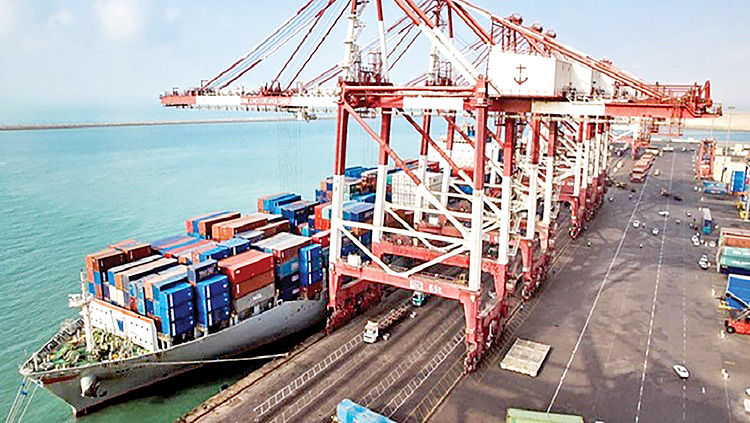
The US president has announced that from now on, any government continuing trade with Iran will be subject to a 25% tariff.
Iran’s foreign trade volume has been significantly limited under intensified sanctions over the past two decades. Currently, fewer than 10 countries have trade values with Iran exceeding $2 billion. Now, US President Donald Trump aims to impose a new risk on Iran’s economy by targeting its few remaining trade partners.
Trump on Tuesday said, “From this moment on, any country that trades with the Islamic Republic of Iran will pay a 25% tariff on any trade it conducts with the United States. This order is final and irrevocable.”
Research shows that China, the UAE, and Turkey are Iran’s most important trade partners. The US is among the top three trade partners of these three countries, but Iran is not necessarily in that position. Therefore, there is a possibility of a decline in Iran’s trade with these countries if the tariffs are implemented.
Experts emphasize that if these tariffs are applied, the role of the informal economy in the country will expand, and transaction costs will increase.
History of Tariff Use
Trump has used international tariffs as a tool of pressure since his first term. During his second term, Trump imposed widespread tariffs on most major countries and trade partners on a day dubbed “Liberation Day.” After these tariffs were applied, various countries gradually reached tariff agreements that led to mutual reductions in tariffs. Following this tariff war, a large portion of countries opted to reach agreements with the US, which led to mutual tariff reductions on traded goods.
Iran was not significantly affected by these tariffs, as there is no extensive direct economic relationship between the two countries. However, the so-called “maximum pressure” sanctions in 2018 during Trump’s first term severely impacted Iran’s foreign trade and led to a sharp decline in foreign currency revenues and a surge in currency devaluation that year.
After Joe Biden took office, limited diplomatic openings occurred, which helped improve the country’s foreign currency revenue, especially from oil exports.
With Trump’s return to power in the US, the country once again placed “maximum pressure” on its agenda. According to experts, although this development did not significantly affect the country’s foreign trade due to the continuation of sanctions during Biden’s term, they politically created conditions for expanding tensions between Iran and the West.
New Sanctions Tool
Trump has recently announced that any trade relationship with Iran could lead to the application of 25% tariffs on goods from that country in relation to the US. This method of sanction is a new type of sanction the US has used. Trump has previously used tariffs as a tool of pressure in trade, both during his first and second terms. However, this trade tool is being used for the first time by US governments against Iran.
The difference between this type of sanction and previous ones is that in past sanctions, individuals and companies involved in trade with Iran were identified and sanctioned. In this new tariff-based sanction, however, countries will be subject to tariffs regardless of which companies are involved in the trade.
Experts emphasize that these tariffs, if implemented, could lead to increased transaction costs between traders and the expansion of informal economies among countries.
Expert View
Ali Reza Hosseini, a trade expert, told Donya-e-Eqtesad that this new risk imposed on Iran’s economy could force governments to choose between maintaining trade with Iran or accepting a 25% tariff in trade with the US. “Countries like China have extensive trade relations with Iran, and completely cutting off this trade seems unlikely. However, countries like Iraq, the UAE, and Turkey also have extensive trade relations with the US. It is possible that the cost of trade with these countries will increase.”
This expert added, “In such conditions, with increased transaction costs, the possibility of price shocks in imported goods also exists, and this issue may be reflected in inflation data. The impact of this policy will be long-term and could expand the underground and opaque economy.”
Policymakers in this situation must use their capacity to reduce political risks in foreign trade and work to remove tariff barriers between Iran and its trade partners, he noted.