
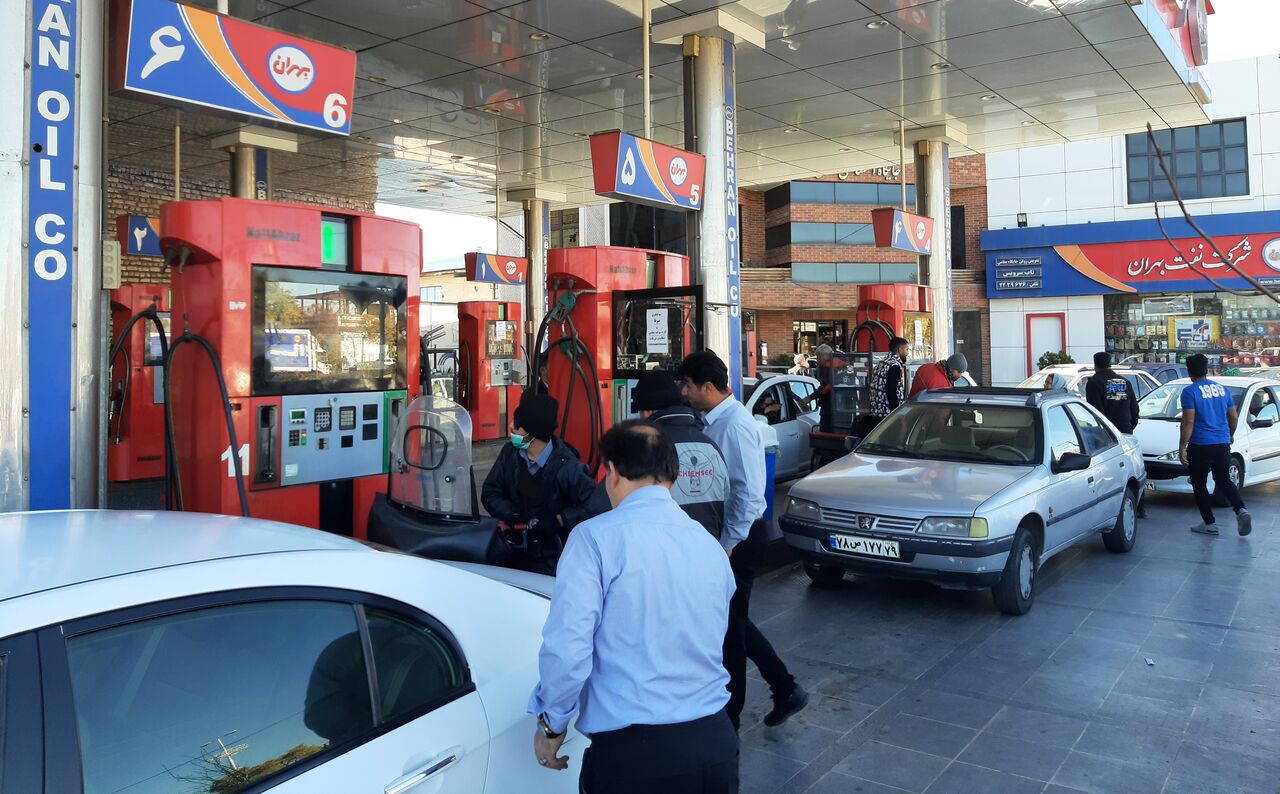
Iran recorded a significant decline in gasoline consumption on the first day of implementing its new fuel pricing and quota regulations, with usage falling by around 40%, according to senior officials reported by IRNA.
The figures have been presented as an early indication that the government’s latest effort to rationalize fuel consumption may be gaining traction despite persistent inflationary pressures in the wider economy.
Speaking at a meeting of the Government–Private Sector Dialogue Council on Tuesday, Samad Hassanzadeh, head of the Iran Chamber of Commerce, said the sharp drop in consumption was reported in a briefing delivered to the office of First Vice President Mohammedreza Aref. He described the development as “encouraging,” noting that reduced fuel use could yield broader benefits, including lighter traffic congestion and lower environmental pollution in major cities.
Public Acceptance
Hassanzadeh acknowledged concerns that changes in gasoline pricing could affect household costs and the prices of goods, but argued that public acceptance of the policy had so far prevented social unrest.
He added that widespread increases in the prices of essential goods have dominated public attention to such an extent that the recent gasoline adjustment was perceived as relatively marginal.
Under the new policy, implemented from December 22, the National Iranian Oil Products Distribution Company (NIOPDC) has removed stored gasoline quotas for all government vehicles, vehicles operating in free trade zones, imported cars and newly manufactured domestic vehicles.
According to NIOPDC CEO Karamat Veis-Karami, these categories are no longer eligible for subsidized gasoline priced at 1,500 tomans (about 1.2 cents per liter) or 3,000 tomans (around 2.3 cents per liter), and must refuel exclusively at the free-market rate of 5,000 tomans, equivalent to 3.8 cents per liter.
Private vehicles remain exempt from these changes. Their monthly quota is unchanged at 160 liters, comprising 60 liters at 1,500 tomans and 100 liters at 3,000 tomans. Any additional consumption is supplied using station cards at the 5,000-toman rate. Subsidized fuel priced at 1,500 tomans can be stored for up to six months, while the 3,000-toman quota is credited monthly.
Compensatory Measures
Government spokesperson Fatemeh Mohajerani said the policy was implemented after coordination with trade unions and transport associations. She stressed that no additional price hikes would be passed on to fuel consumers, as compensatory measures have been designed for the transport sector.
For high-consumption groups such as taxis, commercial motorcycles, and pickup trucks, special arrangements have been put in place. In the case of ride-hailing taxis consuming more than 60 liters per month, the government will cover the cost difference to avoid added financial pressure.
Mohajerani said all revenues generated from the policy are being deposited into a dedicated account and will be used to support public welfare programs, including Iran’s electronic food voucher scheme.
She emphasized that the objective is not simply to raise gasoline prices, but to “normalize” fuel rates as part of a broader move away from a command-style (state-directed) economy.