
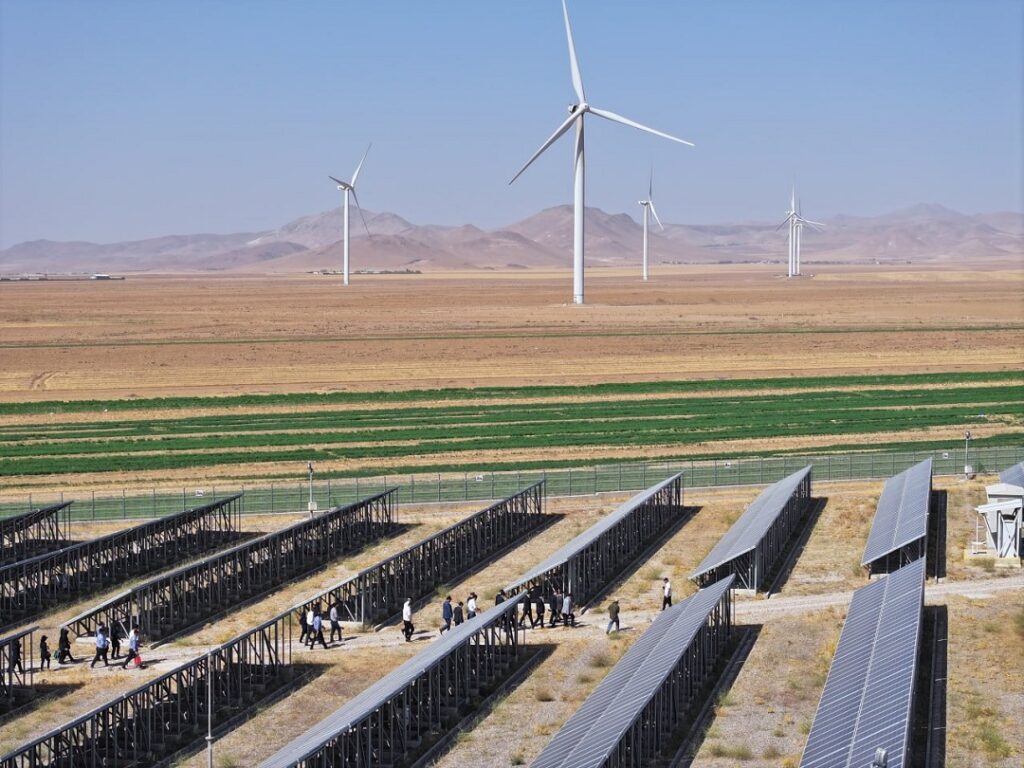
Iran has issued licenses for the construction of nearly 100 gigawatts (GW) of solar power capacity in a major push to attract private investment and ease the country’s deepening electricity imbalance, senior officials at the Renewable Energy and Energy Efficiency Organization (SATBA) said this week.
Speaking at a meeting on barriers to renewable energy development, Jafar Mohammadzadeh Sigaroudi, SATBA’s deputy for investment, said renewable energy—particularly solar and wind—can play a meaningful role in supplying part of Iran’s electricity demand, though it is not a silver bullet for the country’s power shortages, IRNA reported.
Iran’s electricity imbalance, driven by years of policy missteps and underinvestment, currently stands at around 25,000 megawatts, according to official estimates.
“To suggest that renewables alone can fully eliminate the electricity gap would be misleading,” Sigaroudi said, stressing that the country is now firmly in an energy transition phase.
Globally, energy systems are shifting away from fossil fuels toward cleaner sources, making renewable energy development “no longer a choice, but an inevitability,” he added.
Modest Share
Despite Iran’s significant natural advantages—including high solar irradiation and strong wind corridors—renewables still account for a modest share of installed capacity.
The country currently has around 12,000 to 13,000 megawatts of hydropower capacity and roughly 3,400 megawatts of renewable power generation. By contrast, global data for 2024 show that 46 percent of electricity worldwide is generated from renewable sources, with many countries lacking Iran’s natural potential outperforming it in deployment.
A key feature of Iran’s renewable strategy is its reliance on the private sector. Sigaroudi noted that since 2016, not a single kilowatt of government-built renewable power has been injected into the national grid. International experience, he argued, shows that sustainable renewable growth must be driven by people and private investors, from construction to operation, to ensure value creation.
Studies across more than 70 countries indicate that around 80 percent of renewable expansion has been achieved through guaranteed power purchase mechanisms.
Of the 100 GW in solar licenses issued so far, only a fraction is expected to materialize. Even under ideal global conditions, about 20 percent of licenses typically reach the production stage; in Iran, the figure is estimated at around 15 percent. Still, this could translate into a significant capacity addition over time.