
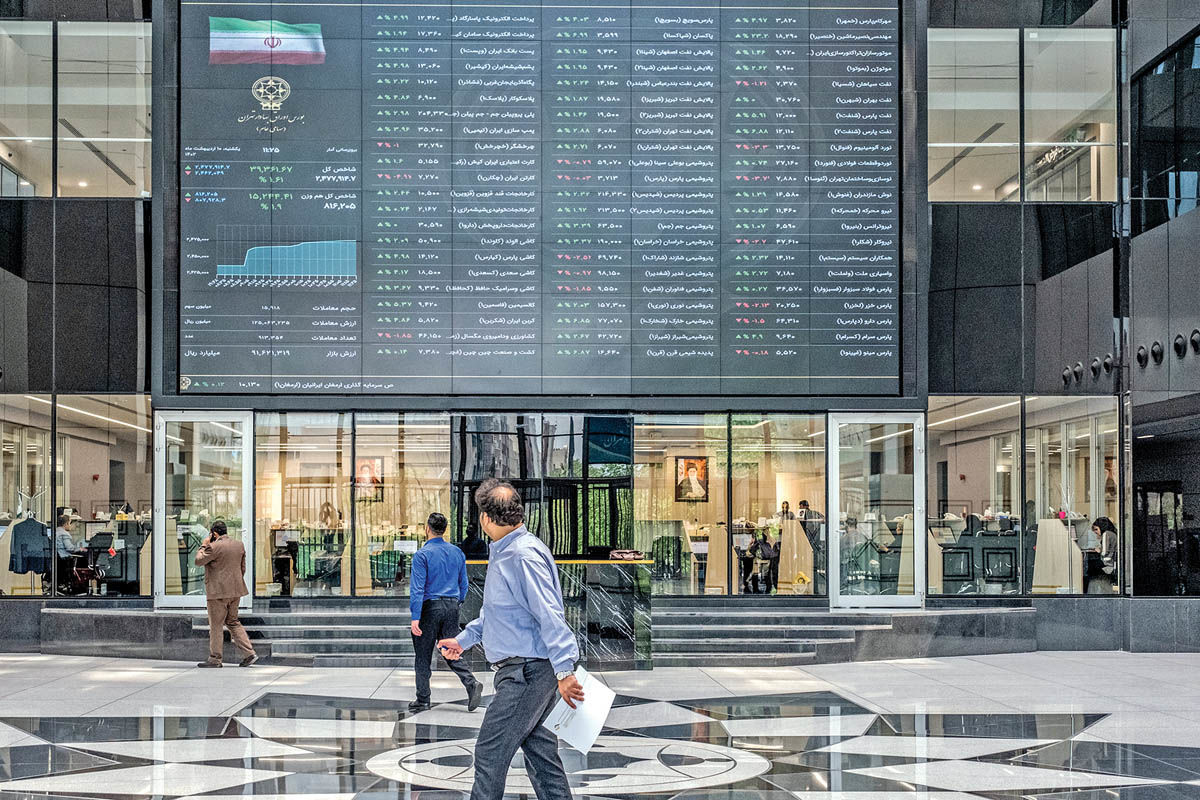
The Tehran Stock Exchange (TSE) continued its upward trajectory for the twelfth consecutive day, with the benchmark index rising 2 percent to 3,728,000 points. Analysts suggest that, provided political risks remain subdued, the market is positioned for sustained growth.
Experts point to both technical and fundamental drivers behind the rally. Technical indicators show that the TSE has broken its three-year channel ceiling at 3,500,000 points, making targets of 3,700,000 and even 4,200,000 points feasible in the short term.
Additionally, the market has surpassed historical price ceilings in certain indices, signaling increased investor confidence. Trading volumes have risen significantly compared to recent months, reaching levels that indicate genuine demand rather than speculative activity.
From a fundamental perspective, policy shifts appear to be supporting the market. According to an expert, government measures are steering capital toward equities to relieve pressure on currency, gold, and inflationary pressures. The gradual transfer of export revenues into the secondary foreign exchange market (where exporters receive a higher rate), persistent refining discounts, and the ongoing discussion around petrochemical feedstock pricing are creating positive signals for affected companies.
Valuation also remains attractive. Pedram Yazdani, a market analyst, notes that many large-cap companies are trading below intrinsic value, making equities appealing for long-term investors. Sustained corporate profitability, political stability, steady liquidity inflows, and relative exchange rate stability are critical for maintaining momentum. Rising P/E ratios, higher inflation expectations, and improvements in export-oriented firms have further strengthened demand, particularly in major benchmark industries.
Milad Zamani, an equity market strategist, highlights inflationary effects on corporate earnings, noting that while much of the profit growth reflects nominal price increases, certain sectors, including steel and select manufacturers, are seeing real gains. The persistent gap between the official and free-market exchange rates is also being priced in by the market, supporting further upward movement.
Analysts caution that external factors, including budget risks and any resurgence in political tensions, could temper gains. However, current conditions suggest that the TSE may continue to close its gap with parallel markets, offering investors opportunities across both large-cap and previously underperforming stocks.