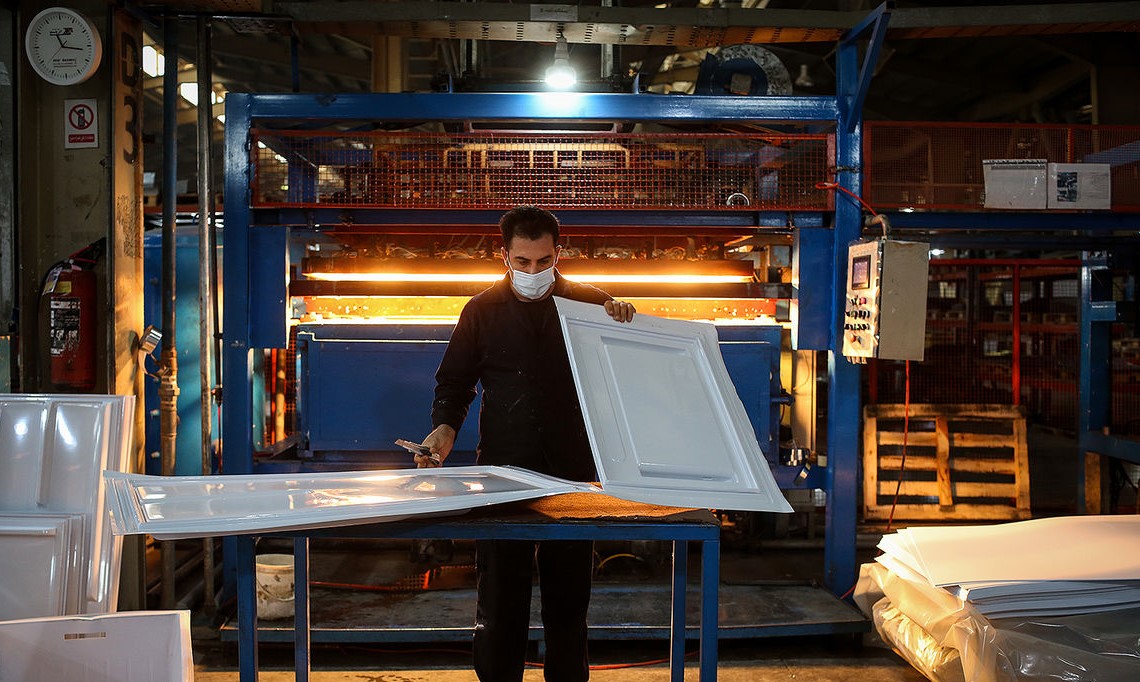
Iran’s latest national accounts show a marked weakening in the country’s investment trend, with gross fixed capital formation contracting 4.8% in the summer of the Iranian calendar year 1404 (June–September 2025)—the lowest level in four and a half years.
The drop represents a 2.9-percentage-point fall from the previous quarter and underscores mounting structural pressures on the economy.
Economists emphasize that Iran’s growth model is capital-intensive: long-term expansion depends on sustained investment in physical and technological capacity, while short-term fluctuations are primarily driven by oil revenues.
With investment growth now negative and on a declining trajectory, analysts warn that Iran’s medium-term growth outlook is weakening.
Persistent underinvestment risks accelerating “capital erosion,” where aging machinery and infrastructure are not replaced, gradually reducing productive capacity and limiting job creation.
Historical data show that investment has been volatile and predominantly negative since 2012. The 2010s were marked by sanctions, macroeconomic instability and falling oil income, all of which placed heavy pressure on investment and output.
Although some brief rebounds occurred—such as the 22.3% increase in 2016 driven by higher oil exports—they failed to translate into sustained capacity building.
From 2017 to 2020, renewed sanctions and heightened economic risks pushed investment deep into negative territory, bottoming out at –16.7% in 2020. This prolonged contraction eroded the capital stock and weighed on productivity, creating long-lasting constraints on potential growth.
A partial recovery appeared in 2021, with several quarters of strong investment growth, followed by a softer performance in 2022 as momentum faded.
Investment improved again in 2023, averaging around 5% across quarters, but economists note that this level remained well below what is required to sustain long-term growth above 5%.
The downward trend returned in 2024. Fixed capital formation slowed to 3.4% in the spring and slipped into negative territory by autumn, while GDP growth fell to 1.7%.
By spring 1404 (March–June 2025), investment had dropped 1.9% and GDP posted a –0.2% quarterly contraction — the first such decline in several years. The summer reading of –4.8% further highlights the depth of the downturn, with GDP inching up only 0.3% driven mostly by oil and public services rather than broad-based activity.
Economists cite high inflation, macroeconomic instability, a strained banking system, limited access to foreign financing and heightened geopolitical tensions—including the recent 12-day Iran-Israel conflict—as key factors deterring long-term investment.
With capital formation weakening and structural constraints mounting, analysts say the government’s target of 8% annual growth under the Seventh Development Plan is increasingly unrealistic.
Without comprehensive macroeconomic stabilization, regulatory reform, improved external relations and broader access to external capital, Iran’s growth prospects will remain under significant pressure.