
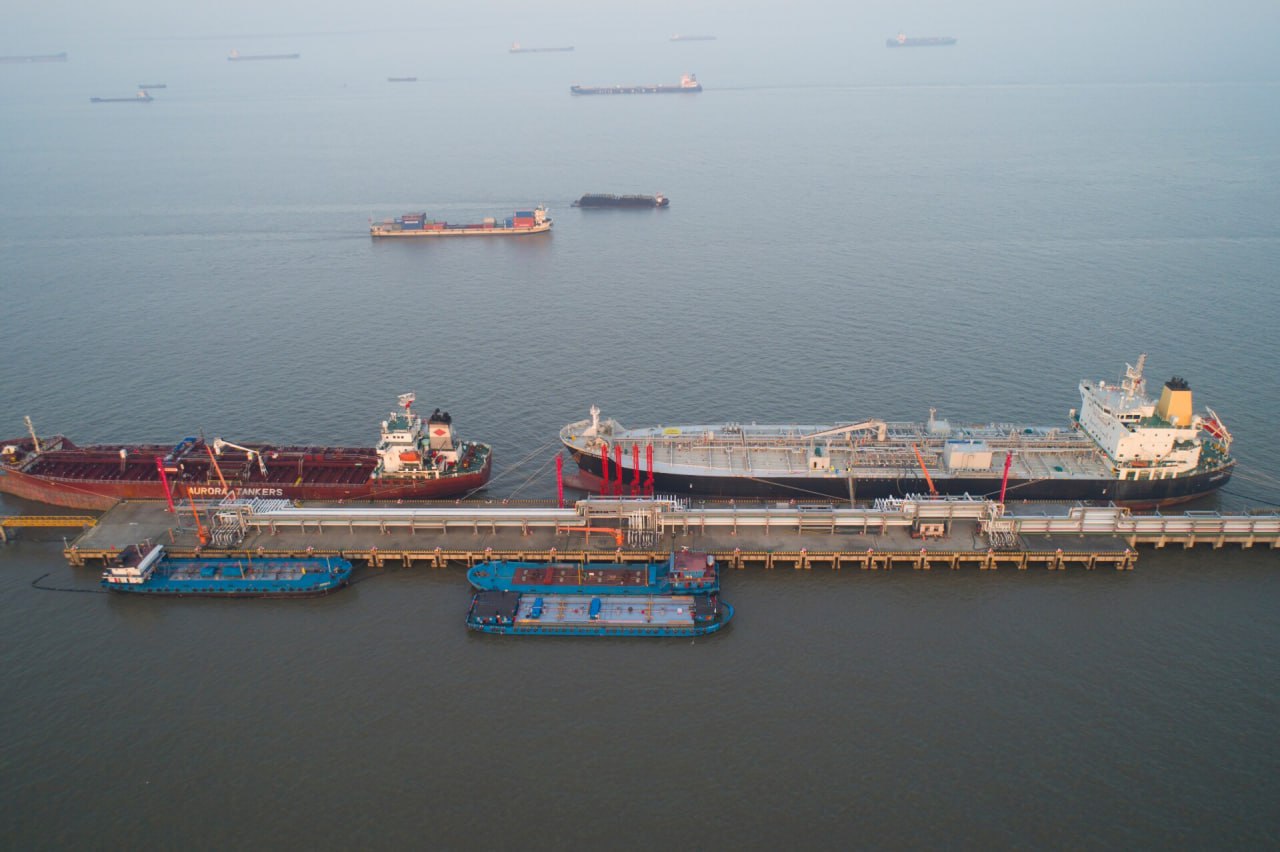
Iran’s crude exports to China have seen a notable rise following Beijing’s latest round of import quotas, with independent Chinese refiners—known as “teapots”—increasing their intake from floating storage and port reserves.
According to ISNA, several Shandong-based refineries reported receiving shipments this week, much of which had been purchased before the new quotas were announced.
These private processors are the main buyers of Iranian and Russian crude, yet quota limits and sanctions had previously forced them to reduce purchases in the fourth quarter.
Shipping intelligence data from Kpler shows that Iranian crude held at sea has reached 52 million barrels—the highest in two-and-a-half years—with about half located off Malaysia. This represents nearly double the volume from a month ago and a sharp increase from 5–10 million barrels in January.
The accumulation has widened discounts on Iranian grades, with Iran Light trading $8 below Brent, compared with $4 in August.
Recent US sanctions on key Chinese terminals, including Rizhao, have complicated discharges, forcing some vessels to divert to alternative ports.
Despite these hurdles, Iranian exports are running at their fastest pace in seven years, highlighting strong demand from China.
Analysts estimate that the latest quota allocations provided roughly 7–8 million tons of import rights to about 20 private refiners, boosting access to Iranian crude at a critical time.
The surge in Iranian shipments comes amid a global oil market flush with supply. OPEC plus has loosened production restrictions, while rival producers continue to expand output, contributing to weaker benchmark prices.
Brent futures, the global benchmark, have declined by more than 15% this year. Even so, Iran has leveraged competitive discounts and strategic quota allocations to maintain robust flows to its largest buyer.
While the appetite of Chinese teapots is expected to remain modest through year-end due to narrow refining margins, the combination of renewed quotas, floating storage releases, and competitive pricing has allowed Iran to sustain high export levels.
As geopolitical tensions and market oversupply intersect, Iran’s growing crude shipments to China underline both the resilience of its oil sector and the critical role of private Chinese refiners in supporting Tehran’s energy trade.