
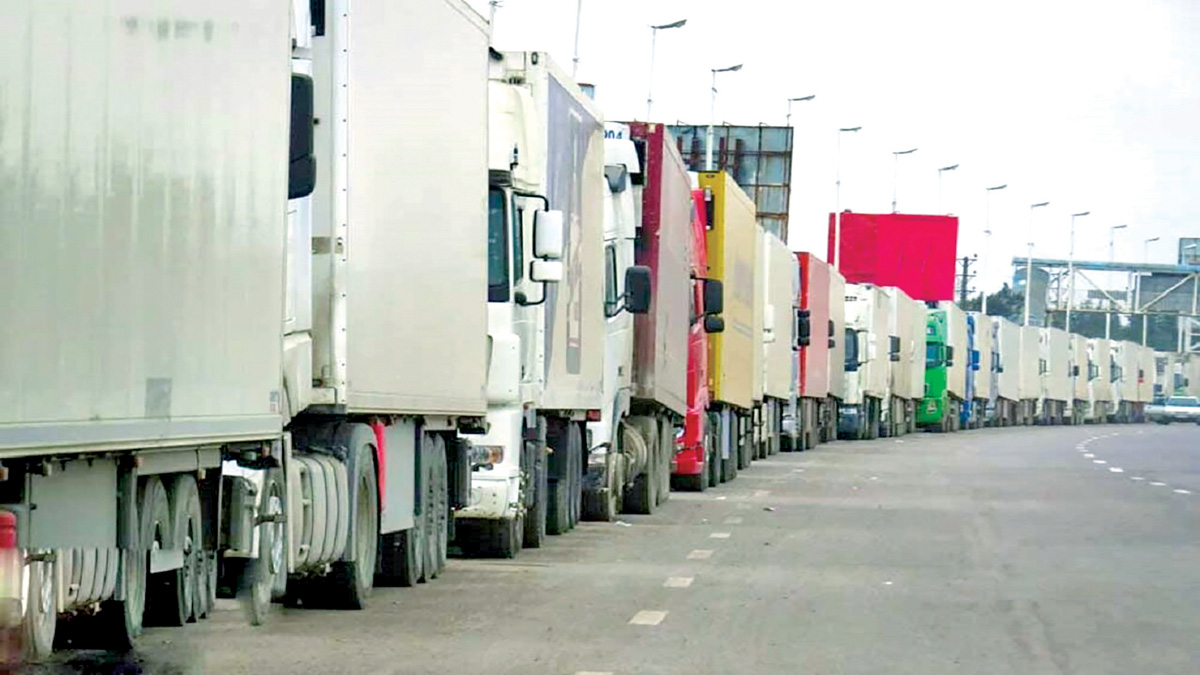
Iran’s debate over energy-price restructuring has intensified after the recent gasoline increase revived expectations that diesel could be next. While officials view price reform as unavoidable, transport-sector experts caution that any adjustment—if made without parallel investment in road and rail fleets—could erode Iran’s already fragile competitiveness in regional and international trade.
The issue gained momentum after the Cabinet approved a new three-tier gasoline pricing framework last week. Many analysts believe this marks the beginning of a broader energy overhaul.
Diesel remains a sensitive component: it underpins road freight transport, the backbone of both domestic distribution and export logistics. Stakeholders warn that even a modest diesel increase could raise logistics costs sharply, undermine export margins, and push regional routes away from Iran.
Iran has already experimented with tiered diesel pricing. A May 2024 decision set three levels for diesel purchases: the first tier at 3,000 rials ($0.025) per liter for urban-use quotas; the second at 50 percent of refinery procurement cost; and the third equal to the full refinery cost when fuel was procured outside quota allowances or without electronic manifests.
Truckers argued the system was unworkable due to quota delays and fuel shortages, forcing many into the higher-cost tiers. A nationwide strike followed, ultimately suspending the reform.
Despite this setback, the economic logic behind change remains compelling. Logistics already account for a disproportionately high share of Iran’s trade costs—estimated at nearly double global averages.
Rising fleet age, low fuel efficiency, and dependence on heavily subsidized diesel all contribute to systemic inefficiency. Any price shock directly reverberates across supply chains, raising the final cost of both exports and imports and weakening Iran’s position on key corridors.
Inevitable Move
Energy experts interviewed by Donya-e Eqtesad argue that diesel reform is inevitable. According to Arash Najafi, head of the Energy Commission at Iran Chamber of Commerce, the government is likely to pursue diesel pricing changes “under a separate economic model,” noting that subsidies cannot remain indefinitely.
He stresses that without restructuring, Iran will face accumulating losses—but warns that full price pass-through will remove the economic viability of many current export goods, which today depend on near-free fuel for competitiveness.
Najafi calls for a phased, well-communicated reform, with targeted subsidies and strict oversight. He notes that even if diesel rises from roughly 3 cents to 5 cents per liter, smuggling incentives will not materially change unless prices approach 40 cents—the threshold at which illicit cross-border flows become uneconomical.
Trade-sector representatives warn that higher diesel costs will directly inflate road-transport tariffs, increasing the final price of export products and accelerating a shift to rail and maritime transport.
Chain Reaction
Fatemeh Moqimi, a member of the Iran Chamber of Commerce, argues that this chain reaction would slow cargo delivery, reduce the presence of Iranian products in global markets, and weaken Iran’s role in regional transit networks.
She notes that competitors such as Turkey and China—with younger fleets and lower logistical inefficiencies—stand to benefit if Iran’s transport costs rise sharply.
Higher transport costs also risk increasing storage times, slowing supply chains, and raising demurrage and loading/unloading expenses across ports and terminals.
Moqimi warns that reduced export volumes will lead to stockpiles, contract risks, and financial losses for carriers, producers, and service companies.
Meanwhile, truckers—already burdened by inflation and rising maintenance costs—would face intense financial pressure without a clear vehicle-renewal program.
Analysts converge on one point: diesel reform may be necessary, but mismanaged reform could push Iran out of crucial trade loops.
A carefully phased increase, accompanied by modern fleet investment and clear communication, is seen as the only path to preserving Iran’s competitiveness while moving toward a sustainable fuel-pricing structure.